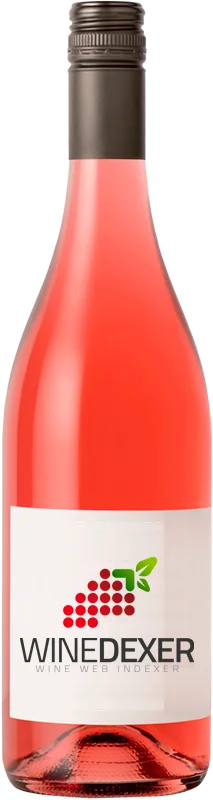
Winery EmilianaSanta Emiliana Rosé
 Pink wine



This wine generally goes well with
Details and technical informations about Winery Emiliana's Santa Emiliana Rosé.
Discover the grape variety: Douce noire
The douce noire, as its name indicates, is a black grape variety. It originated in the region between the valleys of the Isère and Saône rivers. Often in autumn, its foliage takes on a red hue. The bunches of the black sweet are larger than average. They are compact and winged. Spherical, its berries are of normal size. The flesh is juicy, soft and sweet. Although it is on the verge of extinction, this variety is still present in some Jura vineyards. Some call it corbeau, especially in Savoie, but it has other names such as gros noir, plant de Calarin and pecot. The sweet black is associated with an average budding and a late first ripening. Hardy and vigorous, it adapts to poorly irrigated soils. This variety produces a wine with low alcohol content, flat, soft and without much finesse. It should be consumed within the year. Sweet black is generally grown with Persian. It must be associated with other grape varieties to be better. Nowadays, this variety is not multiplied at all.
Last vintages of this wine
The best vintages of Santa Emiliana Rosé from Winery Emiliana are 2018, 2019, 2017, 0 and 2020.
Informations about the Winery Emiliana
The Winery Emiliana is one of of the world's great estates. It offers 176 wines for sale in the of Central Valley to come and discover on site or to buy online.

The wine region of Central Valley
The Central Valley (El Valle Central) of Chile is one of the most important wine-producing areas in South America in terms of Volume. It is also one of the largest wine regions, stretching from the Maipo Valley (just south of Santiago) to the southern end of the Maule Valley. This is a distance of almost 250 miles (400km) and covers a number of Climate types. The Central Valley wine region is easily (and often) confused with the geological Central Valley, which runs north–south for more than 620 miles (1000km) between the Pacific Coastal Ranges and the lower Andes.
The word of the wine: Maturing (champagne)
After riddling, the bottles are stored on "point", upside down, with the neck of one bottle in the bottom of the other. The duration of this maturation is very important: in contact with the dead yeasts, the wine takes on subtle aromas and gains in roundness and fatness. A brut without year must remain at least 15 months in the cellar after bottling, a vintage 36 months.