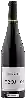
Winery Elkjær-AmielVentoux
 White wine


This wine generally goes well with poultry, rich fish (salmon, tuna etc) or shellfish.
Food and wine pairings with Ventoux
Pairings that work perfectly with Ventoux



Original food and wine pairings with Ventoux
The Ventoux of Winery Elkjær-Amiel matches generally quite well with dishes of rich fish (salmon, tuna etc), shellfish or poultry such as recipes of poached salmon in coconut milk with curry, scallops or scallops express with cognac or couscous chicken and merguez.
Details and technical informations about Winery Elkjær-Amiel's Ventoux.
Discover the grape variety: Roussanne
Roussane is a white grape variety, planted on an area of more than 700 ha. Originally from Montélimar, it is also found in Savoie, Languedoc and Roussillon, and grows very well in calcareous, poor, stony soil. It prefers to be pruned short. Roussane is also called fromenteau, barbin or bergeron. The young leaves are bubbled with fine down. When adult, they become thicker. It flowers in June and matures in mid-September. The grapes are cylindrical in shape, the berries are small and turn red when ripe, and the wine produced from pure Roussane is of extraordinary quality. It has a delicate aroma reminiscent of coffee, honeysuckle, iris and peony. The taste of this wine improves with age. It is part of the blend of the appellations Vin-de-Savoie, Côtes-du-Vallée du Rhône or Châteauneuf-du-Pape.
Informations about the Winery Elkjær-Amiel
The Winery Elkjær-Amiel is one of of the world's greatest estates. It offers 9 wines for sale in the of Vin de France to come and discover on site or to buy online.

The wine region of Vin de France
Vin de France is the most basic level of quality for wines from France. These are generally uncomplicated everyday drinks - most often blends, but perhaps also Varietal wines based on a well-known Grape variety such as Cabernet Sauvignon, Merlot, Chardonnay or Sauvignon Blanc. Wines from France are those that do not meet the criteria stipulated by the Protected Designation of Origin (PDO) or Protected Geographical Indication (PGI) laws (see information on French wine labels). This may be because the vineyards are outside the delimited production areas or because the grape varieties or winemaking techniques used do not conform to the rules of the local appellations.
The word of the wine: Blanc de blancs (champagne)
Champagne made only from the Chardonnay grape. The expression has been somewhat overused by the intensive use made of it by certain large distributors of white table wines (or sparkling wines) who were thus seeking to promote their product.