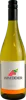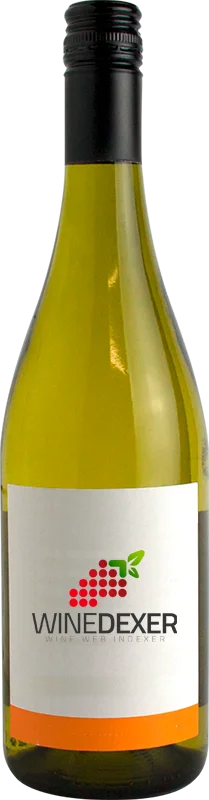
Winery Duc de MonfloryMedium Sweet Blanc
 White wine


In the mouth this white wine is a powerful.
This wine generally goes well with rich fish (salmon, tuna etc), shellfish or mild and soft cheese.
Taste structure of the Medium Sweet Blanc from the Winery Duc de Monflory
Light | Bold | |
Dry | Sweet | |
Soft | Acidic |
In the mouth the Medium Sweet Blanc of Winery Duc de Monflory in the region of Burgundy is a powerful.
Food and wine pairings with Medium Sweet Blanc
Pairings that work perfectly with Medium Sweet Blanc



Original food and wine pairings with Medium Sweet Blanc


The Medium Sweet Blanc of Winery Duc de Monflory matches generally quite well with dishes of pasta, rich fish (salmon, tuna etc) or shellfish such as recipes of fish lasagne, hawaiian poke bowl or mussels with camembert cheese.
Details and technical informations about Winery Duc de Monflory's Medium Sweet Blanc.
Discover the grape variety: Koshu
One of the oldest varieties cultivated in Japan, generally in arbors/pergolas, most often used as a table grape and recently vinified and associated with other varieties. It is a Vitis vinifera also known in Australia, New Zealand, Germany, the United States... practically unknown in France.
Last vintages of this wine
The best vintages of Medium Sweet Blanc from Winery Duc de Monflory are 2016
Informations about the Winery Duc de Monflory
The Winery Duc de Monflory is one of of the world's greatest estates. It offers 13 wines for sale in the of Burgundy to come and discover on site or to buy online.

The wine region of Burgundy
Bourgogne is the catch-all regional appellation title of the Burgundy wine region in eastern France ("Bourgogne" is the French name for Burgundy). Burgundy has a Complex and comprehensive appellation system; counting Premier Cru and Grand Cru titles, the region has over 700 appellation titles for its wines. Thus, Burgundy wines often come from one Vineyard (or several separate vineyards) without an appellation title specific to the region, Village or even vineyard. A standard Burgundy wine may be made from grapes grown in one or more of Burgundy's 300 communes.
The word of the wine: Alcoholic fermentation
Transformation of sugars into alcohol under the effect of yeast. These yeasts exist in their natural state in the vineyards and in the cellars. Artificial seeding with selected yeasts is however very often practiced.