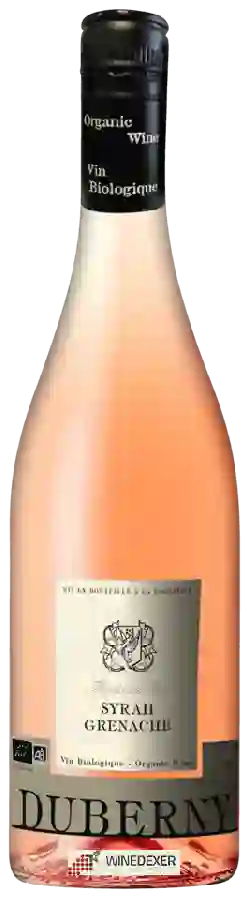
Winery DubernyMonts du Roi Syrah - Grenache
 Pink wine
In the mouth this pink wine is a with a nice freshness.
This wine generally goes well with vegetarian, appetizers and snacks or lean fish.

Taste structure of the Monts du Roi Syrah - Grenache from the Winery Duberny
Light | Bold | |
Dry | Sweet | |
Soft | Acidic |
In the mouth the Monts du Roi Syrah - Grenache of Winery Duberny in the region of Pays d'Oc is a with a nice freshness.
Food and wine pairings with Monts du Roi Syrah - Grenache
Pairings that work perfectly with Monts du Roi Syrah - Grenache



Original food and wine pairings with Monts du Roi Syrah - Grenache


The Monts du Roi Syrah - Grenache of Winery Duberny matches generally quite well with dishes of pasta, vegetarian or appetizers and snacks such as recipes of fettuccine with cream and cheese, vegan leek and tofu quiche or beet and goat aperitif verrines.
Details and technical informations about Winery Duberny's Monts du Roi Syrah - Grenache.
Discover the grape variety: Arinto de Bucelas
Crisp, structured dry whites with a pale golden color, taut palate and signature sharp acidity, offering refined aromas of citrus (lemon), green apple, white flowers (acacia), honey and calcareous mineral notes. Fine ageing and cellaring potential; one of Portugal's great evolving whites. Star of Bucelas DOC, north-east of Lisbon, cultivated for over 700 years. Portuguese indigenous variety from Bucelas.
Informations about the Winery Duberny
The Winery Duberny is one of of the world's greatest estates. It offers 8 wines for sale in the of Pays d'Oc to come and discover on site or to buy online.

The wine region of Pays d'Oc
The single-grape IGP par excellence: modern, accessible, frank and fruity wines, the popular signature of the Midi. Spicy Syrah reds (pepper, blackberry), round Merlot, structured Cabernet, generous Grenache, supple Cinsault. Crisp, tangy rosés. Opulent Chardonnay whites, lively Sauvignon, floral, apricoty Viognier.
The word of the wine: Organoleptic
Elements, such as flavours and tactile sensations, that can stimulate a sensory receptor.