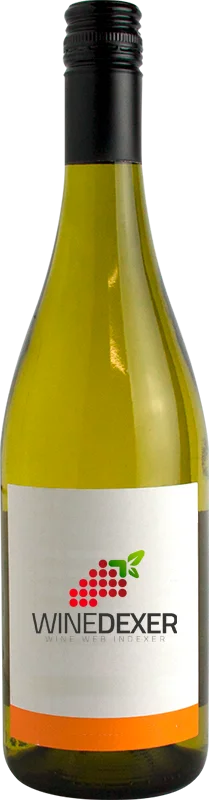
Domaine VacheronSancerre Les Garennes
 White wine



In the mouth this white wine is a with a nice freshness.
This wine generally goes well with pork, vegetarian or shellfish.
Taste structure of the Sancerre Les Garennes from the Domaine Vacheron
Light | Bold | |
Dry | Sweet | |
Soft | Acidic |
In the mouth the Sancerre Les Garennes of Domaine Vacheron in the region of Loire Valley is a with a nice freshness.
Food and wine pairings with Sancerre Les Garennes
Pairings that work perfectly with Sancerre Les Garennes



Original food and wine pairings with Sancerre Les Garennes

The Sancerre Les Garennes of Domaine Vacheron matches generally quite well with dishes of pork, shellfish or spicy food such as recipes of old-fashioned pork roll, brasucade of mussels from languedoc or piperade.
Details and technical informations about Domaine Vacheron's Sancerre Les Garennes.
Discover the grape variety: Johanniter
An interspecific cross between Riesling and FR 589-54 (Seyve-Villard 12481 x (pinot gris or rülander x chasselas or gutedel)) obtained in Germany in 1968 by Johannes Zimmermann. It has the particularity of having only one gene for resistance to mildew and powdery mildew. This variety can be found in Germany, Belgium, Switzerland, the Netherlands, etc. In France, it is practically unknown. Note that the "Johanniter" grape variety is a protected trademark.
Informations about the Domaine Vacheron
The Domaine Vacheron is one of of the world's great estates. It offers 17 wines for sale in the of Sancerre to come and discover on site or to buy online.

The wine region of Sancerre
The wine region of Sancerre is located in the region of Haute Loire of Loire Valley of France. Wineries and vineyards like the Domaine Edmond Vatan or the Domaine Jean-Paul Balland produce mainly wines white, red and pink. The most planted grape varieties in the region of Sancerre are Pinot noir, Chenin blanc and Chardonnay, they are then used in wines in blends or as a single variety. On the nose of Sancerre often reveals types of flavors of pineapple, wood smoke or jasmine and sometimes also flavors of fennel, pink grapefruit or green bell pepper.
The wine region of Loire Valley
The Loire Valley is a key wine region in western France. It follows the course of the Loire River on its Long journey through the heart of France, from the inland hills of the Auvergne to the plains of the French Atlantic coast near Nantes (Muscadet country). Important in terms of quantity and quality, the region produces large quantities (about 4 million h/l each year) of everyday wines, as well as some of France's greatest wines. Diversity is another of the region's major assets; the styles of wine produced here range from the light, tangy Muscadet to the Sweet, honeyed Bonnezeaux, the Sparkling whites of Vouvray and the juicy, Tannic reds of Chinon and Saumur.
The word of the wine: Chaptalization
The addition of sugar at the time of fermentation of the must, an ancient practice, but theorized by Jean-Antoine Chaptal at the dawn of the 19th century. The sugar is transformed into alcohol and allows the natural degree of the wine to be raised in a weak or cold year, or - more questionably - when the winegrower has a harvest that is too large to obtain good maturity.