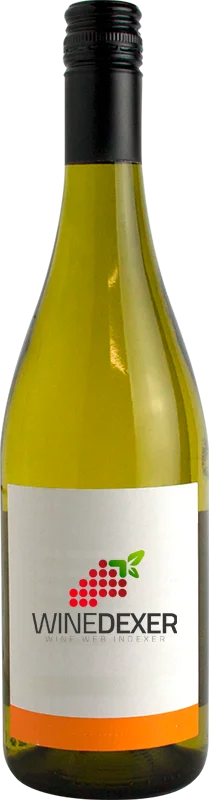
Domaine G. QuillotMacvin du Jura
 White wine



In the mouth this white wine is a with a nice freshness.
This wine generally goes well with poultry, mild and soft cheese or mushrooms.
Taste structure of the Macvin du Jura from the Domaine G. Quillot
Light | Bold | |
Dry | Sweet | |
Soft | Acidic |
In the mouth the Macvin du Jura of Domaine G. Quillot in the region of Jura is a with a nice freshness.
Wine flavors and olphactive analysis

Food and wine pairings with Macvin du Jura
Pairings that work perfectly with Macvin du Jura


Original food and wine pairings with Macvin du Jura
The Macvin du Jura of Domaine G. Quillot matches generally quite well with dishes of poultry, mushrooms or mild and soft cheese such as recipes of eggs in meurette, salmon koulibiac or homemade pizza crunch.
Details and technical informations about Domaine G. Quillot's Macvin du Jura.
Discover the grape variety: Aledo
This variety has been cultivated for a long time in Spain. In France, it is practically unknown, although it is registered in the Official Catalogue of vine varieties, list A2.
Informations about the Domaine G. Quillot
The Domaine G. Quillot is one of of the world's greatest estates. It offers 9 wines for sale in the of Jura to come and discover on site or to buy online.

The wine region of Jura
The Jura is a small wine region in eastern France that is responsible for some very special and traditional wine styles. It is close to the Swiss Jura, but quite distinct from it. Wedged between Burgundy to the west and Switzerland to the east, the region is characterized by a landscape of Wooded hills and the winding topography of the Jura Mountains. The Jura vineyards cover just over 1,850 hectares, forming a narrow strip of land almost 80 km Long from North to South.
The word of the wine: Muscat blanc à petits grains
A white grape variety cultivated since antiquity on the shores of the Mediterranean, it is considered the noblest of the muscats. It is mainly used to make sweet wines, often from mutage. In France, it is the sole variety used in many natural sweet wines: muscat-de-frontignan, muscat-de-mireval, muscat-de-lunel, muscat-de-saint-jean-de-minervois, muscat-de-beaumes-de-venise, muscat-du-cap-corse. Combined with Muscat d'Alexandrie, it gives Muscat-de-Rivesaltes. It is also used to make sparkling white wines (clairette-de-die; moscato d'asti and asti spumante in Italy) and dry wines (alsace-muscat). Powerfully aromatic and complex, its wines evoke fresh grapes, roses, exotic fruits, citrus fruits and spices.