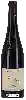
Domaine du Val BrunSaumur-Champigny
 Red wine
This wine generally goes well with
Details and technical informations about Domaine du Val Brun's Saumur-Champigny.
Discover the grape variety: Grosse Arvine
Most certainly originating from the Swiss Valais - Martigny and Fully vineyards - it is the result of a natural intraspecific crossing between the rèze and a child of the arvine with which it should not be confused. Today, grosse Arvine is practically no longer cultivated and remains completely unknown in France, as in all other wine-producing countries.
Informations about the Domaine du Val Brun
The Domaine du Val Brun is one of of the world's greatest estates. It offers 14 wines for sale in the of Saumur-Champigny to come and discover on site or to buy online.

The wine region of Saumur-Champigny
The wine region of Saumur-Champigny is located in the region of Saumur of Loire Valley of France. Wineries and vineyards like the Domaine Clos Rougeard or the Domaine Clos Rougeard produce mainly wines red, white and pink. The most planted grape varieties in the region of Saumur-Champigny are Cabernet franc, Cabernet-Sauvignon and Chenin blanc, they are then used in wines in blends or as a single variety. On the nose of Saumur-Champigny often reveals types of flavors of smoke, grass or yellow apple and sometimes also flavors of tree fruit, oil or banana.
The wine region of Loire Valley
The Loire Valley is a key wine region in western France. It follows the course of the Loire River on its Long journey through the heart of France, from the inland hills of the Auvergne to the plains of the French Atlantic coast near Nantes (Muscadet country). Important in terms of quantity and quality, the region produces large quantities (about 4 million h/l each year) of everyday wines, as well as some of France's greatest wines. Diversity is another of the region's major assets; the styles of wine produced here range from the light, tangy Muscadet to the Sweet, honeyed Bonnezeaux, the Sparkling whites of Vouvray and the juicy, Tannic reds of Chinon and Saumur.
The word of the wine: Thermoregulation
Control of the vinification temperatures (by circulating hot or cold water on the walls of the vats, for example). This is a major step forward, which in particular helps to preserve the freshness of the aromas threatened by excessive temperature rises during fermentation.