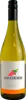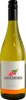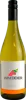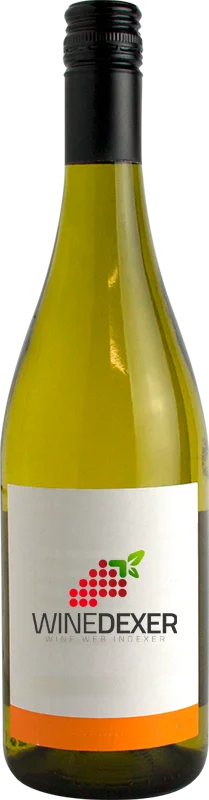
Domaine des Dix VinsDivina
 White wine


This wine generally goes well with
Details and technical informations about Domaine des Dix Vins's Divina.
Discover the grape variety: Villard blanc
Interspecific crossing between 6468 Seibel and 6905 Seibel or subéreux, obtained by the House of Seyve-Villard of Saint Vallier in the Drôme. Together with Villard noir or 18315 Seyve-Villard, these were the two most widely propagated direct-producing hybrids. The white Villard has also been used as a progenitor for new varieties. It can be found in Hungary, Mexico, Brazil, Canada, the United States and Japan. In the south of France, some old vines still exist. We have also found it in private homes where it is grown in pergolas for the consumption of its excellent grapes at full maturity. Today, it is on the verge of extinction, although it is registered in the Official Catalogue of wine grape varieties, list A1.
Last vintages of this wine
The best vintages of Divina from Domaine des Dix Vins are 0
Informations about the Domaine des Dix Vins
The Domaine des Dix Vins is one of of the world's greatest estates. It offers 20 wines for sale in the of Genève to come and discover on site or to buy online.

The wine region of Genève
Geneva, at the western end of Lac Léman (Lake Geneva), is the second-largest city in Switzerland and the country's third-largest wine producing canton after Valais and Vaud. Although not famously associated with wine, the city and its environs are home to numerous Vineyards and wineries, some within just a few miles of the Center. At 1,400 hectares (3,500 acres), Geneva accounts for 10 percent of the country's vineyard area. Gamay is the predominant variety here, with the Swiss workhorse Chasselas (often labelled "Fendant") and Pinot Noir taking second and third place respectively.
The word of the wine: Hat
Solid part (marc), composed of pips and skins (sometimes of the stalk), which forms at the top of the tank during fermentation. The pigeage consists in breaking this cap to put back in suspension these elements and to favour the exchanges between the juice and the skins.