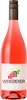
Domaine De La LinotteCôtes de Toul Vin Gris
 Red wine



This wine generally goes well with
The Côtes de Toul Vin Gris of the Domaine De La Linotte is in the top 20 of wines of Côtes de Toul.
Details and technical informations about Domaine De La Linotte's Côtes de Toul Vin Gris.
Discover the grape variety: Cabernet-Cortis
Interspecific cross between Cabernet Sauvignon and Solaris (Merzling x Geisenheim 6493 (Zarya Severa x Muscat Ottonel)) made in 1982 by Norbert Becker of the Freiburg Research Institute in Germany. It has the particularity of having only one gene for resistance to mildew and powdery mildew. It can be found in the Netherlands, Denmark, Belgium, Switzerland, etc., but is still little known in France. Note that Cabernet-Carol has the same parents.
Last vintages of this wine
The best vintages of Côtes de Toul Vin Gris from Domaine De La Linotte are 2015
Informations about the Domaine De La Linotte
The Domaine De La Linotte is one of of the world's greatest estates. It offers 3 wines for sale in the of Côtes de Toul to come and discover on site or to buy online.

The wine region of Côtes de Toul
Côtes de Toul is a wine of controlled origin since 1998. In 1951, a major replanting campaign was undertaken. It is produced in the area located west of Nancy and south-west on the left bank of the Moselle, in Meurthe-et-Moselle to be precise. The Vineyard, spread over 100 hectares, benefits from a southern and south-eastern exposure resulting in ideal climatic conditions (optimal sunshine).
The wine region of Moselle
Moselle is an appellation covering white, red and rosé wines from an area in the administrative department of Moselle in Northeastern France. The Vineyard">Vineyard zone covers land on both sides of the Mosel River (known locally as the Moselle), before it flows north to form the heart of Germany's famed Mosel wine region. Moselle wines are most often light, Aromatic whites with crisp Acidity. They are made predominantly from the Auxerrois Blanc and Müller-Thurgau grape varieties.
The word of the wine: Bâtonnage
A very old technique that has come back into fashion in modern oenology, which consists of shaking the white wine in the barrels at the end of fermentation, or after fermentation, with a stick or a flail, in order to suspend the fine lees composed of yeasts at the end of their activity. This process is sometimes used for red wines.