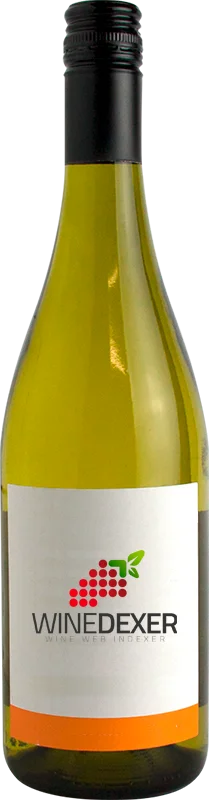
Winery CostadoroTrebbiano d'Abruzzo
 White wine


In the mouth this white wine is a with a nice freshness.
This wine generally goes well with vegetarian, appetizers and snacks or lean fish.
Taste structure of the Trebbiano d'Abruzzo from the Winery Costadoro
Light | Bold | |
Dry | Sweet | |
Soft | Acidic |
In the mouth the Trebbiano d'Abruzzo of Winery Costadoro in the region of Abruzzo is a with a nice freshness.
Food and wine pairings with Trebbiano d'Abruzzo
Pairings that work perfectly with Trebbiano d'Abruzzo



Original food and wine pairings with Trebbiano d'Abruzzo


The Trebbiano d'Abruzzo of Winery Costadoro matches generally quite well with dishes of pasta, vegetarian or appetizers and snacks such as recipes of elodie's pasta risotto, quiche without pastry or tuna, tomato and olive cake.
Details and technical informations about Winery Costadoro's Trebbiano d'Abruzzo.
Discover the grape variety: Ravat 34
Jean-François Ravat, in his published writings, has never given the names of the parents of this wine grape. For some, it comes from an interspecific cross between Chardonnay and Vitis Berlandieri. It can be found in North America and Canada, but is virtually unknown in France.
Last vintages of this wine

The best vintages of Trebbiano d'Abruzzo from Winery Costadoro are 2016, 0, 2015
Informations about the Winery Costadoro
The Winery Costadoro is one of of the world's great estates. It offers 31 wines for sale in the of Abruzzo to come and discover on site or to buy online.

The wine region of Abruzzo
Abruzzo is an Italian wine region located on the eastern (Adriatic) coast. Its immediate neighbors in CentralItaly are Marche to the North, Lazio to the west and southwest and Molise to the southeast. Abruzzo has one DOCG - Montepulciano d'Abruzzo Colline Teramane - and three DOC wine appellations. The reds and Cerasuolo d'Abruzzo and Montepulciano d'Abruzzo, as well as the white wine appellation Trebbiano d'Abruzzo are the most notable, followed by the lesser-known Controguerra.
The word of the wine: Courgée
Name of the fruiting branch left after pruning and which is then arched along the trellis in the Jura (in the Mâconnais, it is called the tail).