The Winery Dobogó of Tokaj

Winery Dobogó
The winery offers 18 different wines
4.0


Note - 1Note - 1Note - 1Note - 1Note - 0
Its wines get an average rating of 4.
It is ranked in the top 22 of the estates of Tokaj.
It is located in Tokaj

The Winery Dobogó is one of the world's great estates. It offers 18 wines for sale in of Tokaj to come and discover on site or to buy online.
Top Winery Dobogó wines

Looking for the best Winery Dobogó wines in Tokaj among all the wines in the region? Check out our tops of the best red, white or effervescent Winery Dobogó wines. Also find some food and wine pairings that may be suitable with the wines from this area. Learn more about the region and the Winery Dobogó wines with technical and enological descriptions.

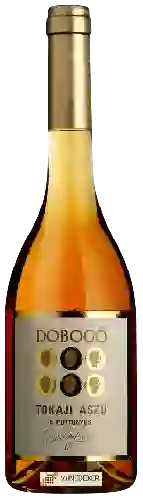
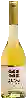
The top sweet wines of Winery Dobogó

Food and wine pairings with a sweet wine of Winery Dobogó

How Winery Dobogó wines pair with each other generally quite well with dishes of sweet desserts such as recipes of express cherry clafoutis.

Organoleptic analysis of sweet wines of Winery Dobogó

On the nose the sweet wine of Winery Dobogó. often reveals types of flavors of pineapple, cream or tropical and sometimes also flavors of citrus, apples or peach.

The best vintages in the sweet wines of Winery Dobogó

  • 2009With an average score of 4.90/5
  • 2006With an average score of 4.50/5
  • 2004With an average score of 4.50/5
  • 2005With an average score of 4.40/5
  • 2000With an average score of 4.40/5
  • 2008With an average score of 4.30/5

The grape varieties most used in the sweet wines of Winery Dobogó.

  • Furmint
  • Moscato
  • Hárslevelű

Discovering the wine region of Tokaj

Tokaj (formerly Tokaj-Hegyalja) has Long been Hungary's most famous and respected wine region, thanks mostly to its nectar-like, botrytized Tokaji dessert wines. The region and its wine are held in such esteem in Hungary that the national anthem thanks God for it: Tokaj szolovesszein nektárt csepegtettél - into the vineyards of Tokaj you dripped Sweet nectar The region is located in the northeast of Hungary, near the border with Slovakia. Comprising roughly 30 small towns and villages, it measures 40 kilometers (25 miles) from southwest to northeast, making it roughly the same Size as Burgundy's Côte d'Or. At its very southern edge is the town of Tokaj from which the region and its wines ultimate take their name.

The main centers of Tokaji wine production are the towns of Mad, Tarcal and Tokaj itself. Tokaj's Climate is relatively Warm. The winegrowing area is protected by the vast crescent-shaped mountain range (the Carpathians) which dominates neighboring Slovakia and Romania. The region's soils are a patchwork of various types.

Volcanic clays are to be found in the higher sites on the many hillsides here, and on lower-lying sites layers of loess and other sedimentary soils cover the bedrock. Closer to the banks of the Bodrog, the river which flows along the region's eastern edge, sandier soils prevail, particularly around Tokaj town. The Grape varieties used to make Tokaji wines are Furmint, Harslevelu and Sárga Muskotály (Muscat Blanc), in that order of importance. Furmint, which dominates the Tokaji blend, is renowned for its naturally high Acidity, high sugar levels and spicy aromatic profile.

The top white wines of Winery Dobogó

Food and wine pairings with a white wine of Winery Dobogó

How Winery Dobogó wines pair with each other generally quite well with dishes such as recipes .

Organoleptic analysis of white wines of Winery Dobogó

On the nose the white wine of Winery Dobogó. often reveals types of flavors of non oak, earth or microbio and sometimes also flavors of oak, tree fruit or spices.

The best vintages in the white wines of Winery Dobogó

  • 2005With an average score of 4.10/5
  • 2017With an average score of 4.00/5
  • 2010With an average score of 4.00/5
  • 2011With an average score of 3.96/5
  • 2012With an average score of 3.86/5
  • 2015With an average score of 3.83/5

The grape varieties most used in the white wines of Winery Dobogó.

  • Furmint
  • Hárslevelű

Discover the grape variety: Pinot noir

Pinot noir is an important red grape variety in Burgundy and Champagne, and its reputation is well known! Great wines such as the Domaine de la Romanée Conti elaborate their wines from this famous grape variety, and make it a great variety. When properly vinified, pinot noit produces red wines of great finesse, with a wide range of aromas depending on its advancement (fruit, undergrowth, leather). it is also the only red grape variety authorized in Alsace. Pinot Noir is not easily cultivated beyond our borders, although it has enjoyed some success in Oregon, the United States, Australia and New Zealand.

The top red wines of Winery Dobogó

Food and wine pairings with a red wine of Winery Dobogó

How Winery Dobogó wines pair with each other generally quite well with dishes of veal, pork or game (deer, venison) such as recipes of wiener schnitzel or viennese schnitzel, the garbure or duck pot au feu.

Organoleptic analysis of red wines of Winery Dobogó

On the nose the red wine of Winery Dobogó. often reveals types of flavors of earth, red fruit.

The best vintages in the red wines of Winery Dobogó

  • 2014With an average score of 3.90/5
  • 2013With an average score of 3.80/5
  • 0With an average score of 3.70/5
  • 2011With an average score of 3.60/5

The grape varieties most used in the red wines of Winery Dobogó.

  • Pinot Noir

The word of the wine: Viscosity

Consistency of wine reminiscent of the tactile sensation of sugar syrup with varying degrees of fluidity, due to the alcohol and natural sugar in the grapes present in sweet wines. In excess, this sensation can make the wine pasty and heavy. To the eye, viscosity is referred to as tears.

Discover other wineries and winemakers neighboring the Winery Dobogó

Planning a wine route in the of Tokaj? Here are the wineries to visit and the winemakers to meet during your trip in search of wines similar to Winery Dobogó.

Discover the grape variety: Furmint

Furmint is a very old Hungarian grape variety. It arrived in France in the 1800s. The bunches of Furmint are of medium size. They are compact and cylindrical. The berries are also of medium size. They are either short elliptical or rounded. Their thick skin changes from greenish white to reddish once the fruit is mature. This grape variety is known throughout the world for being part of the composition of the Hungarian Tokaj vintage. Robust, rich in alcohol and acidity, it needs light soil and a warm, dry climate to be fertile. It must also be pruned short and its budding takes place 7 days after the Chasselas. As for its maturity, it is of the second late period. This grape variety fears grey rot and erinosis. When vinified dry, Furmint produces a very fragrant, fine and highly alcoholic white wine.