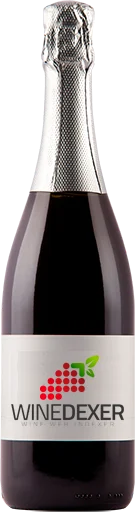
Winery Di CarloProsecco
 Sparkling wine


In the mouth this sparkling wine is a with a nice vivacity and a fine and pleasant bubble.
This wine generally goes well with vegetarian, appetizers and snacks or shellfish.
Taste structure of the Prosecco from the Winery Di Carlo
Light | Bold | |
Soft | Acidic | |
Gentle | Fizzy |
In the mouth the Prosecco of Winery Di Carlo in the region of Veneto is a with a nice vivacity and a fine and pleasant bubble.
Food and wine pairings with Prosecco
Pairings that work perfectly with Prosecco



Original food and wine pairings with Prosecco


The Prosecco of Winery Di Carlo matches generally quite well with dishes of shellfish, vegetarian or appetizers and snacks such as recipes of blanquette of monkfish and scallops, vegan leek and tofu quiche or apple chips.
Details and technical informations about Winery Di Carlo's Prosecco.
Discover the grape variety: Cabernet_Dorio
Intraspecific crossing between the limberger and the dornfelder realized in 1971 by Bernard Hill of the Research Institute of Weinsberg in Germany. It can be found in Germany, Belgium and Switzerland, but is little known in France. Note that the cabernet-dorsa has the same parents.
Last vintages of this wine
The best vintages of Prosecco from Winery Di Carlo are 0
Informations about the Winery Di Carlo
The Winery Di Carlo is one of of the world's greatest estates. It offers 4 wines for sale in the of Prosecco to come and discover on site or to buy online.

The wine region of Prosecco
The wine region of Prosecco is located in the region of Vénétie of Italy. We currently count 1461 estates and châteaux in the of Prosecco, producing 2419 different wines in conventional, organic and biodynamic agriculture. The wines of Prosecco go well with generally quite well with dishes .
The wine region of Veneto
Veneto is an important and growing wine region in northeastern Italy. Veneto is administratively Part of the Triveneto area, aLong with its smaller neighbors, Trentino-Alto Adige and Friuli-Venezia Giulia. In terms of geography, culture and wine styles, it represents a transition from the Alpine and Germanic-Slavic end of Italy to the warmer, drier, more Roman lands to the South. Veneto is slightly smaller than the other major Italian wine regions - Piedmont, Tuscany, Lombardy, Puglia and Sicily - but it produces more wine than any of them.
The word of the wine: Phenolic ripeness
A distinction is made between the ripeness of sugars and acids and the ripeness of tannins and other compounds such as anthocyanins and tannins, which will bring structure and colour. Grapes can be measured at 13° potential without having reached this phenolic maturity. Vinified at this stage, they will give hard, astringent wines, without charm.