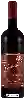
Winery DexheimerRheinhessen Eiswein Spätburgunder
 Red wine
This wine generally goes well with vegetarian
Food and wine pairings with Rheinhessen Eiswein Spätburgunder
Pairings that work perfectly with Rheinhessen Eiswein Spätburgunder

Original food and wine pairings with Rheinhessen Eiswein Spätburgunder
The Rheinhessen Eiswein Spätburgunder of Winery Dexheimer matches generally quite well with dishes of vegetarian such as recipes of mushroom, bacon and gruyere quiche.
Details and technical informations about Winery Dexheimer's Rheinhessen Eiswein Spätburgunder.
Discover the grape variety: Petit Bouschet
Crossbreeding carried out in 1829 by Louis Bouschet de Bernard (father of Henri Bouschet, also known for his numerous varieties) between the aramon and the teinturier. It was practically multiplied all over the world. Today, it is an extinct grape variety and can only be found in a few private or public collections and conservatories.
Informations about the Winery Dexheimer
The Winery Dexheimer is one of of the world's greatest estates. It offers 16 wines for sale in the of Rheinhessen to come and discover on site or to buy online.

The wine region of Rheinhessen
Rheinhessen is Germany's largest region for producing the quality wines of the Qualitätswein bestimmter Anbaugebiete (QbA) and Prädikatswein designations, with roughly 26,500 hectares (65,000 acres) of Vineyard">Vineyards as of 2014. Many of its most significant viticultural areas are favorably influenced by the Rhine river, which runs aLong its North and eastern borders. The Rhine, along with the Nahe river to the west and the Haardt mountains to its South, form a natural border. Rheinhessen covers an area south of Rheingau, north of Pfalz and east of Nahe, and is located within the Rhineland-Palatinate federal state.
The word of the wine: Solera
A method of maturing practiced in Andalusia for certain sherries, which aims to continuously blend older and younger wines. It consists of stacking several layers of barrels; those located at ground level (solera) contain the oldest wines, the youngest being stored in the barrels on the upper level. The wine to be bottled is taken from the barrels on the lower level, which is replaced by younger wine from the upper level, and so on.