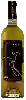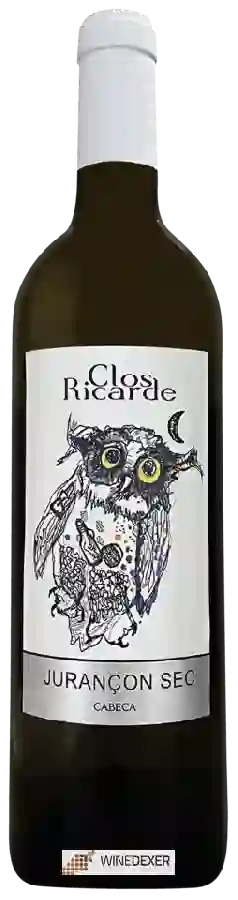
Winery MontesquiouClos Ricarde Cabeca Jurancon Sec
 White wine



This wine generally goes well with

Wine flavors and olphactive analysis




On the nose the Clos Ricarde Cabeca Jurancon Sec of Winery Montesquiou in the region of South West often reveals types of flavors of peach, apricot or stone and sometimes also flavors of earth, microbio or vegetal.
Details and technical informations about Winery Montesquiou's Clos Ricarde Cabeca Jurancon Sec.
Discover the grape variety: Mancin
Light and simple fruity reds, pale ruby colour, soft tannins and light mouth with moderate acidity, with understated red fruit aromas. Discreet rustic profile. Almost extinct, preserved in INRAE varietal collections. Testifies to pre-phylloxera ampelographic diversity in Bordeaux. Rare French black grape formerly grown in Bordeaux.
Last vintages of this wine
The best vintages of Clos Ricarde Cabeca Jurancon Sec from Winery Montesquiou are 2016, 2015
Informations about the Winery Montesquiou
The Winery Montesquiou is one of of the world's greatest estates. It offers 17 wines for sale in the of Jurançon to come and discover on site or to buy online.

The wine region of Jurançon
Béarn jewel of whites at the foot of the Pyrenees: signature Petit Manseng as king white for sweet wines (on-vine raisining) — opulent and fresh with notes of honey, candied pineapple, mango, apricot, white flowers, cinnamon, nutmeg and a truffle touch, signature chiseled acidity balancing sugar. Gros Manseng as dry, lively and taut (citrus, exotic fruits, flowers). Courbu and Lauzet as complement. AOC (1936), ~1,000 ha on 25 communes south of Pau, clay-gravel terraces.
The wine region of South West
French mosaic of strong identities south of Bordeaux. Cahors and its Malbec ("black wine"): deep reds with notes of blackberry, plum, violet, tobacco and cocoa, firm tannins. Madiran and its dense, age-worthy Tannat. Jurançon whites: golden sweet (apricot, honey, pineapple) and lively dry from Petit Manseng.
The word of the wine: Tastevin
Metal cup, wide and of low height, being used to mirror and taste the wine. Still used in wine brotherhoods for its emblematic and folkloric character, the tastevin has been replaced by the various tasting glasses.