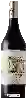
Château de MaujanPessac-Léognan Red
 Red wine
This wine generally goes well with poultry, beef or game (deer, venison).
Food and wine pairings with Pessac-Léognan Red
Pairings that work perfectly with Pessac-Léognan Red



Original food and wine pairings with Pessac-Léognan Red

The Pessac-Léognan Red of Château de Maujan matches generally quite well with dishes of beef, lamb or game (deer, venison) such as recipes of grandma melanie's cassoulet, ghormeh sabzi (iranian herbed lamb stew) or stuffed guinea fowl in the oven.
Details and technical informations about Château de Maujan's Pessac-Léognan Red.
Discover the grape variety: Calabrese
Most certainly of Italian origin, more precisely from Sicily where it is very well known. It should be noted that a certain number of Italian grape varieties bear the synonym or name "calabrese", whether or not followed by an epithet, and care should be taken not to confuse them. Calabrese is also known in the United States, Italy, Bulgaria and Malta. In France, it is virtually absent from the vineyard, although it is listed in the Official Catalogue of Wine Grape Varieties, list A1.
Informations about the Château de Maujan
The Château de Maujan is one of of the world's greatest estates. It offers 1 wines for sale in the of Pessac-Léognan to come and discover on site or to buy online.

The wine region of Pessac-Léognan
The wine region of Pessac-Léognan is located in the region of Graves of Bordeaux of France. Wineries and vineyards like the Château Haut-Brion or the Château Haut-Brion produce mainly wines red, white and pink. The most planted grape varieties in the region of Pessac-Léognan are Cabernet-Sauvignon, Merlot and Cabernet franc, they are then used in wines in blends or as a single variety. On the nose of Pessac-Léognan often reveals types of flavors of pineapple, mango or chalk and sometimes also flavors of pomegranate, green bell pepper or dried rose.
The wine region of Bordeaux
Bordeaux, in southwestern France, is one of the most famous, prestigious and prolific wine regions in the world. The majority of Bordeaux wines (nearly 90% of the production Volume) are the Dry, medium and Full-bodied red Bordeaux blends for which it is famous. The finest (and most expensive) are the wines of the great châteaux of Haut-Médoc and the right bank appellations of Saint-Émilion and Pomerol. The former focuses (at the highest level) on Cabernet Sauvignon, the latter on Merlot.
The word of the wine: Aging
Period during which a wine is kept in a cellar where it goes through different phases of evolution of its aromatic range and a maturation of its constituents (evolution of the colour, refining of the tannins, harmonization of the different flavours, etc.). The wine evolves better and less quickly in large containers, whereas it deteriorates prematurely in half-bottles.