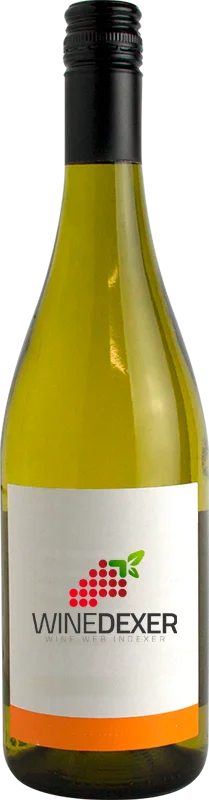
Winery De KasteelhoeveSauvignon Blanc Trocken
 White wine
This wine generally goes well with vegetarian, shellfish or goat cheese.
Food and wine pairings with Sauvignon Blanc Trocken
Pairings that work perfectly with Sauvignon Blanc Trocken



Original food and wine pairings with Sauvignon Blanc Trocken
The Sauvignon Blanc Trocken of Winery De Kasteelhoeve matches generally quite well with dishes of shellfish, vegetarian or goat cheese such as recipes of spaghetti with squid ink (italy), light tuna-tomato quiche (without cream) or croque monsieur with sunny vegetables.
Details and technical informations about Winery De Kasteelhoeve's Sauvignon Blanc Trocken.
Discover the grape variety: Muscat Valvin
Interspecific crossing between the muscat du moulin or 299-35 Couderc (Pédro Ximénès x 603 Couderc (carignan noir x vitis rupestris) and the muscat ottonel obtained in 1962 by Bruce Reisch and Thomas Henick-Kling at the Experimental Station of the Cornell University - Geneva - New York (United States) Apart from this country, it is almost unknown in other wine-producing countries.
Informations about the Winery De Kasteelhoeve
The Winery De Kasteelhoeve is one of of the world's great estates. It offers 31 wines for sale in the of Rheinhessen to come and discover on site or to buy online.

The wine region of Rheinhessen
Rheinhessen is Germany's largest region for producing the quality wines of the Qualitätswein bestimmter Anbaugebiete (QbA) and Prädikatswein designations, with roughly 26,500 hectares (65,000 acres) of Vineyard">Vineyards as of 2014. Many of its most significant viticultural areas are favorably influenced by the Rhine river, which runs aLong its North and eastern borders. The Rhine, along with the Nahe river to the west and the Haardt mountains to its South, form a natural border. Rheinhessen covers an area south of Rheingau, north of Pfalz and east of Nahe, and is located within the Rhineland-Palatinate federal state.
The word of the wine: Shipping (liquor)
In champagne and wines made according to the traditional method, wine is added before corking to fill the void in the bottle created by disgorging. This added wine is often sweetened by sugar incorporated in variable proportions according to the style of wine sought (see dosage). Syn.: liqueur de dosage.