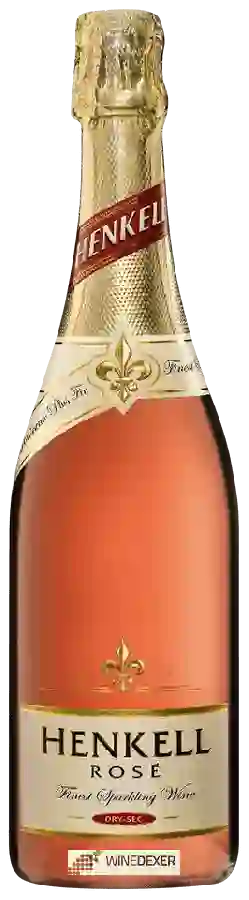
Winery HenkellRosé Dry-Sec
 Sparkling wine


This wine generally goes well with
The Rosé Dry-Sec of the Winery Henkell is in the top 20 of wines of German Wine.

Wine flavors and olphactive analysis





On the nose the Rosé Dry-Sec of Winery Henkell in the region of German Wine often reveals types of flavors of microbio, vegetal or tree fruit and sometimes also flavors of citrus fruit, red fruit.
Details and technical informations about Winery Henkell's Rosé Dry-Sec.
Discover the grape variety: Verdejo
Lively, aromatic whites with sharp acidity and a sleek palate, with intense aromas of grapefruit, lime, fresh herbs, fennel, green almond and saline notes. Typically slightly bitter finish. Absolute star of Rueda DO in Castile-León, now widely exported. Also made as lees-aged and oak-influenced structured cuvées. Native Spanish variety, an ancient Castilian grape.
Last vintages of this wine

The best vintages of Rosé Dry-Sec from Winery Henkell are 2013, 2008, 0, 2014 and 2011.
Informations about the Winery Henkell
The Winery Henkell is one of of the world's greatest estates. It offers 19 wines for sale in the of German Wine to come and discover on site or to buy online.

The wine region of German Wine
World benchmark country for Riesling, ~103,000 ha across 13 regions along the Rhine. King Riesling (~23%): chiselled, mineral whites with signature notes of citrus, white peach, green apple, white flowers, honey and a petrolly age touch, crisp acidity - from taut dry (Trocken) to noble sweets (Auslese, Beerenauslese, Eiswein). Also fine, silky Spätburgunder (Pinot Noir), supple Müller-Thurgau, ample Silvaner, dense Dornfelder. Mosel, Pfalz and Rheingau as stars.
The word of the wine: Vinosity
When tasting a red wine, a pleasant sensation on the palate with a fruity and sappy character in harmony with a caressing and persistent presence of tannins.