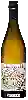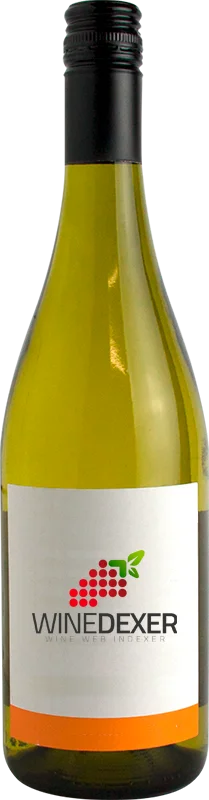
Winery HammelWeisser Burgunder Feinherb
 White wine


This wine generally goes well with rich fish (salmon, tuna etc) and shellfish.
Food and wine pairings with Weisser Burgunder Feinherb
Pairings that work perfectly with Weisser Burgunder Feinherb


Original food and wine pairings with Weisser Burgunder Feinherb
The Weisser Burgunder Feinherb of Winery Hammel matches generally quite well with dishes of rich fish (salmon, tuna etc) or shellfish such as recipes of leek and tuna pie or lobster in court-bouillon.
Details and technical informations about Winery Hammel's Weisser Burgunder Feinherb.
Discover the grape variety: Pinot blanc
Pinot Blanc is a grape variety that originated in Burgundy, mutated from Pinot Gris. Today, it is grown in Alsace where it is called klevner when blended with auxerrois. The continental climate, with its cold winters and hot summers, is particularly suited to pinot blanc. It is resistant to frost in winter and in summer, the roots draw the minerals it needs from the warm soil. Its bunches are made up of small berries with thick skins and melting pulp that produce fruity, spicy wines, balanced between acidity and alcohol. pinot blanc is also used for crémants and sparkling wines. Pinot Blanc is also used for Crémant and sparkling wines. It is widely grown in Italy, where it covers almost 7,000 hectares, and is also found in Germany, Austria, Canada and South Africa.
Last vintages of this wine
The best vintages of Weisser Burgunder Feinherb from Winery Hammel are 2015, 0
Informations about the Winery Hammel
The Winery Hammel is one of of the world's greatest estates. It offers 57 wines for sale in the of Pfalz to come and discover on site or to buy online.

The wine region of Pfalz
Pfalz is a key wine producing region in western Germany, located between the Rhein/Rhine river and the low-lying Haardt mountain range (a natural continuation of the Alsatian Vosges). It covers a rectangle of land 45 miles (75km) Long and 15 miles (25km) wide. To the NorthLiesRheinhessen; to the South, the French border and Alsace. In terms of both quality and quantity, Pfalz is one of Germany's most important regions, and one which shows great promise for the future.
The word of the wine: Guyot (pruning)
This is the most widespread pruning technique. It includes one or two long branches and allows the mechanization of a large number of vineyard operations.