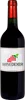
Winery CosmicEncarinyades
 Red wine


In the mouth this red wine is a with a nice freshness.
This wine generally goes well with poultry, beef or veal.
Taste structure of the Encarinyades from the Winery Cosmic
Light | Bold | |
Smooth | Tannic | |
Dry | Sweet | |
Soft | Acidic |
In the mouth the Encarinyades of Winery Cosmic in the region of Catalogne is a with a nice freshness.
Food and wine pairings with Encarinyades
Pairings that work perfectly with Encarinyades



Original food and wine pairings with Encarinyades

The Encarinyades of Winery Cosmic matches generally quite well with dishes of beef, pasta or veal such as recipes of braised beef with guinness, tagliatelle with carbonara or veal escalope with lemon sauce.
Details and technical informations about Winery Cosmic's Encarinyades.
Discover the grape variety: Seyval blanc
A relative of the Saint Pepin, this direct-producing hybrid is the result of an interspecific cross between 5656 Seibel and Ray d'Or (4986 Seibel) obtained in 1921 by the Seyve-Villard company, formerly based in Saint Vallier (Drôme). Seyval blanc is registered in the official catalogue of wine grape varieties, list A. It can be found in the United States, Canada, Brazil, Australia, South Africa, Great Britain, the Netherlands, Germany, Romania, Switzerland, etc. It is practically non-existent in France and is in danger of disappearing.
Last vintages of this wine

The best vintages of Encarinyades from Winery Cosmic are 2019, 2018, 2017
Informations about the Winery Cosmic
The Winery Cosmic is one of of the world's greatest estates. It offers 23 wines for sale in the of Catalogne to come and discover on site or to buy online.

The wine region of Catalogne
Catalonia (Catalunya in Catalan and Cataluña in Spanish) is an autonomous community in the Northeast of Spain. It extends from the historic county (comarca) of Montsia in the South to the border with France in the north. The Mediterranean Sea forms its eastern border and offers 580 km of coastline. The Catalunya D.
The word of the wine: Passerillage
Concentration of the grape by drying out, under the influence of wind or sun, as opposed to botrytisation, which is the concentration obtained by the development of the "noble rot" for which Botrytis cinerea is responsible. The word is mainly used for sweet wines.