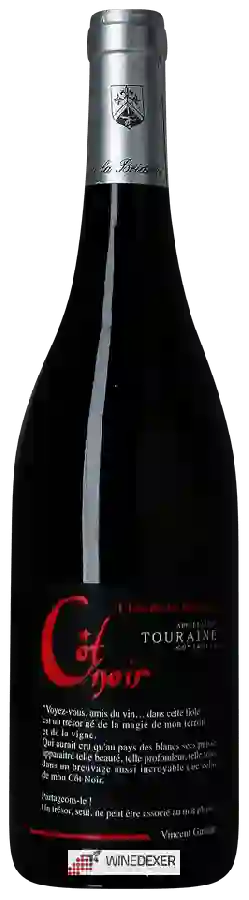
Clos de la BriderieCot Noir Touraine
 Red wine



This wine generally goes well with

Wine flavors and olphactive analysis


On the nose the Cot Noir Touraine of Clos de la Briderie in the region of Loire Valley often reveals types of flavors of black fruit.
Details and technical informations about Clos de la Briderie's Cot Noir Touraine.
Discover the grape variety: Côt
Powerful, structured reds with an almost black inky robe, firm tannins and preserved acidity, with intense aromas of blackberry, plum, blackcurrant, violet, cocoa, spice and balsamic notes. Fine ageing potential. Absolute star of Cahors AOC on the Lot terraces, where it is called Auxerrois (minimum 70% in blends), and a global conqueror as Malbec in Argentina (Mendoza). Also found in Touraine (Côt de Loire) and the South-West. Autochthonous French variety from Quercy.
Last vintages of this wine
The best vintages of Cot Noir Touraine from Clos de la Briderie are 2014, 2015
Informations about the Clos de la Briderie
The Clos de la Briderie is one of of the world's greatest estates. It offers 11 wines for sale in the of Touraine to come and discover on site or to buy online.

The wine region of Touraine
Signature Sauvignon as king of Touraine whites (~80% of plantings): dry, expressive with notes of citrus, green apple, gooseberry, white flowers, exotic fruit and a touch of boxwood, lively acidity — ideal aperitif. Gamay as a juicy, crunchy red (cherry, raspberry, discreet tannins), more structured Cabernet Franc (bell pepper, raspberry) and dense Côt to complete it. Chenin and Chardonnay among whites. Vast Loire AOC between Blois and Tours, tuffeau and flint.
The wine region of Loire Valley
Kingdom of lively, dry whites and fine sparklers. Mineral, taut Sauvignon Blanc (Sancerre, Pouilly-Fumé) with citrus and gunflint notes. Multiform Chenin Blanc (Vouvray, Savennières, Layon): straight dry, floral off-dry or noble sweet honey-quince. Saline, iodised Muscadet (Melon B.
The word of the wine: Passerillage
Concentration of the grape by drying out, under the influence of wind or sun, as opposed to botrytisation, which is the concentration obtained by the development of the "noble rot" for which Botrytis cinerea is responsible. The word is mainly used for sweet wines.


