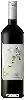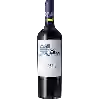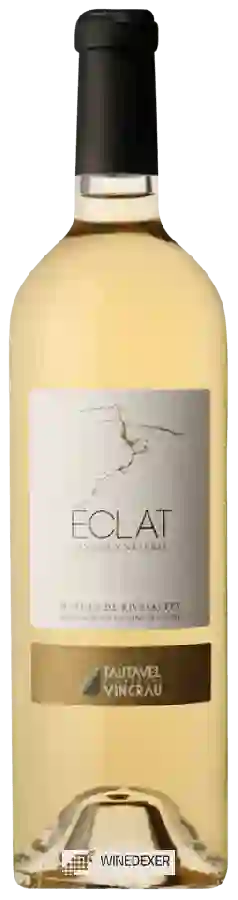
Winery Vignerons de Tautavel VingrauÉclat Muscat de Rivesaltes
 Natural sweet wine


This wine generally goes well with spicy food and sweet desserts.
Food and wine pairings with Éclat Muscat de Rivesaltes
Pairings that work perfectly with Éclat Muscat de Rivesaltes


Original food and wine pairings with Éclat Muscat de Rivesaltes
The Éclat Muscat de Rivesaltes of Winery Vignerons de Tautavel Vingrau matches generally quite well with dishes of spicy food or sweet desserts such as recipes of dab with coconut milk or tarte tatin.
Details and technical informations about Winery Vignerons de Tautavel Vingrau's Éclat Muscat de Rivesaltes.
Discover the grape variety: Knipperlé
Knipperlé blanc is a grape variety that originated in France (Alsace). It produces a variety of grape specially used for wine making. It is rare to find this grape to eat on our tables. This variety of grape is characterized by small to medium sized bunches and small to medium sized grapes. Knipperlé blanc can be found cultivated in these vineyards: South West, Cognac, Bordeaux, Provence & Corsica, Rhone Valley.
Informations about the Winery Vignerons de Tautavel Vingrau
The Winery Vignerons de Tautavel Vingrau is one of of the world's great estates. It offers 34 wines for sale in the of Muscat de Rivesaltes to come and discover on site or to buy online.

The wine region of Muscat de Rivesaltes
The wine region of Muscat de Rivesaltes is located in the region of Rivesaltes of Languedoc-Roussillon of France. Wineries and vineyards like the Domaine Boudau or the Domaine Lafage produce mainly wines natural sweet, sweet and white. The most planted grape varieties in the region of Muscat de Rivesaltes are Melon et Muscadelle, they are then used in wines in blends or as a single variety. On the nose of Muscat de Rivesaltes often reveals types of flavors of earth, spices or melon and sometimes also flavors of mango, dried apricot or non oak.
The wine region of Languedoc-Roussillon
Languedoc (formerly Coteaux du Languedoc) is a key appellation used in the Languedoc-Roussillon wine region of southern France. It covers Dry table wines of all three colors (red, white and rosé) from the entire region, but leaves Sweet and Sparkling wines to other more specialized appellations. About 75% of all Languedoc wines are red, with the remaining 25% split roughly down the middle between whites and rosés. The appellation covers most of the Languedoc region and almost a third of all the vineyards in France.
The word of the wine: Oxidative (breeding)
A method of ageing which aims to give the wine certain aromas of evolution (dried fruit, bitter orange, coffee, rancio, etc.) by exposing it to the air; it is then matured either in barrels, demi-muids or unoaked casks, sometimes stored in the open air, or in barrels exposed to the sun and to temperature variations. This type of maturation characterizes certain natural sweet wines, ports and other liqueur wines.