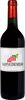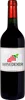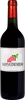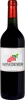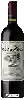
Château RoquebertNature de Roquebert Côtes de Bordeaux
 Red wine


In the mouth this red wine is a powerful with a nice balance between acidity and tannins.
This wine generally goes well with poultry, beef or veal.
Taste structure of the Nature de Roquebert Côtes de Bordeaux from the Château Roquebert
Light | Bold | |
Smooth | Tannic | |
Dry | Sweet | |
Soft | Acidic |
In the mouth the Nature de Roquebert Côtes de Bordeaux of Château Roquebert in the region of Bordeaux is a powerful with a nice balance between acidity and tannins.
Food and wine pairings with Nature de Roquebert Côtes de Bordeaux
Pairings that work perfectly with Nature de Roquebert Côtes de Bordeaux



Original food and wine pairings with Nature de Roquebert Côtes de Bordeaux

The Nature de Roquebert Côtes de Bordeaux of Château Roquebert matches generally quite well with dishes of beef, veal or game (deer, venison) such as recipes of beef tongue with mushrooms, piccata with cheese or baked leg of daguet or roe deer.
Details and technical informations about Château Roquebert's Nature de Roquebert Côtes de Bordeaux.
Discover the grape variety: Muscat Valvin
Interspecific crossing between the muscat du moulin or 299-35 Couderc (Pédro Ximénès x 603 Couderc (carignan noir x vitis rupestris) and the muscat ottonel obtained in 1962 by Bruce Reisch and Thomas Henick-Kling at the Experimental Station of the Cornell University - Geneva - New York (United States) Apart from this country, it is almost unknown in other wine-producing countries.
Informations about the Château Roquebert
The Château Roquebert is one of of the world's greatest estates. It offers 7 wines for sale in the of Côtes de Bordeaux to come and discover on site or to buy online.

The wine region of Côtes de Bordeaux
The Côtes de Bordeaux appellation was created in 2009 to merge four existing appellations used in the Bordeaux region of France. These four appellations are The Premières Côtes de Blaye, Côtes de Castillon, Côtes de Francs and the red wines of the Cadillac region. The latter were previously under the appellation Premières Côtes de Bordeaux. The changes were a commercially motivated decision, intended to create unity between these important but lesser known appellations.
The wine region of Bordeaux
Bordeaux, in southwestern France, is one of the most famous, prestigious and prolific wine regions in the world. The majority of Bordeaux wines (nearly 90% of the production Volume) are the Dry, medium and Full-bodied red Bordeaux blends for which it is famous. The finest (and most expensive) are the wines of the great châteaux of Haut-Médoc and the right bank appellations of Saint-Émilion and Pomerol. The former focuses (at the highest level) on Cabernet Sauvignon, the latter on Merlot.
The word of the wine: Pinot meunier
Cultivated in the 19th century in all the northern vineyards, this black grape variety has largely regressed since. Very present in the Marne valley, it constitutes a third of the vineyards in Champagne, alongside pinot noir and chardonnay with which it is often blended. It brings roundness and red and yellow fruit aromas to champagnes. Pinot meunier is also the dominant grape variety in red and rosé wines in the Orleans AOC and the rare Touraine-Noble-Joué, a grey wine. Syn.: meunier.