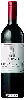
Chateau Pey la RosePauillac
 Red wine


In the mouth this red wine is a powerful with a nice balance between acidity and tannins.
This wine generally goes well with poultry, beef or game (deer, venison).

Taste structure of the Pauillac from the Chateau Pey la Rose
Light | Bold | |
Smooth | Tannic | |
Dry | Sweet | |
Soft | Acidic |
In the mouth the Pauillac of Chateau Pey la Rose in the region of Bordeaux is a powerful with a nice balance between acidity and tannins.
Food and wine pairings with Pauillac
Pairings that work perfectly with Pauillac



Original food and wine pairings with Pauillac

The Pauillac of Chateau Pey la Rose matches generally quite well with dishes of beef, lamb or game (deer, venison) such as recipes of tibs (ethiopia), lamb marinated in white wine or valencian paella - family recipe.
Details and technical informations about Chateau Pey la Rose's Pauillac.
Discover the grape variety: Goldriesling
Aromatic, lively whites with a pale golden robe, a supple palate and preserved acidity, showing signature aromas of muscat, fresh grape, white flowers (acacia), yellow fruits (peach, apricot) and citrus notes. A charming, drink-young profile. Grown on small surfaces in Germany (Saxony) and Luxembourg for characterful white wines. A German white variety created in 1893 at Colmar by Christian Oberlin (Riesling × Courtillier Musqué).
Last vintages of this wine
The best vintages of Pauillac from Chateau Pey la Rose are 0
Informations about the Chateau Pey la Rose
The Chateau Pey la Rose is one of of the world's greatest estates. It offers 1 wines for sale in the of Pauillac to come and discover on site or to buy online.

The wine region of Pauillac
Médoc capital of the First Growths of 1855 (Lafite, Latour, Mouton): signature Cabernet Sauvignon as red king (~70%) with Merlot and Petit Verdot — deep robe with notes of blackcurrant, blackberry, cedar, graphite, tobacco, smoke and undergrowth, racy powerful tannins, sculptural structure and aristocratic finesse, monumental ageing 20-50 years. AOC (1936), 18 Classified Growths, ~1,213 ha on Garonne gravel ridges, near the Gironde estuary.
The wine region of Bordeaux
World-renowned age-worthy reds, led by round Merlot (plum, black fruit) or firm Cabernet Sauvignon (blackcurrant, cedar, graphite), blended with Cabernet Franc and Petit Verdot for tannic structure. Structured Médoc and Graves, velvety Saint-Émilion and Pomerol. Also crisp dry whites (Sauvignon/Sémillon) and opulent sweet Sauternes with honey and candied fruit. A 110,000 ha Gironde vineyard, 65 appellations, cradle of the 1855 classified growths.
The word of the wine: Grand Cru
In Burgundy, the fourth and final level of classification (above the regional, communal and premier cru appellations), designating the wines produced on delimited plots of land (the climats) whose name alone constitutes the appellation. The climats classified as Grand Cru are 32 in the Côte d'Or plus one in Chablis which is divided into 7 distinct climats. Representing barely 1.5% of the production, the Grand Crus are the aristocracy of Burgundy wines.