The Château Les Lilas of Médoc of Bordeaux
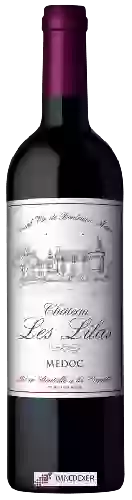
The Château Les Lilas is one of the best wineries to follow in Médoc.. It offers 1 wines for sale in of Médoc to come and discover on site or to buy online.
Looking for the best Château Les Lilas wines in Médoc among all the wines in the region? Check out our tops of the best red, white or effervescent Château Les Lilas wines. Also find some food and wine pairings that may be suitable with the wines from this area. Learn more about the region and the Château Les Lilas wines with technical and enological descriptions.
How Château Les Lilas wines pair with each other generally quite well with dishes of beef, lamb or game (deer, venison) such as recipes of shepherd's pie (potatoes, beef, carrots, bacon), lamb marinated in white wine or duck stew with cahors wine.
In the mouth the red wine of Château Les Lilas. is a powerful with a nice balance between acidity and tannins.
Bordeaux's Médoc is an area of coastal lagoons, sand dunes and pine forests located on the 45th parallel. It is also a global wine powerhouse, and home to four of the world's most prestigious wine villages: Pauillac, Margaux, Saint-Estèphe and Saint-Julien. The estates located in these villages produce some of the most expensive bottles in the world. The region has also provided all but one of the châteaux included in the official 1855 Bordeaux wine classification (Haut-Brion).
The Médoc vineyards cover about 16,000 hectares, including the various small appellations. Approximately 5500 hectares of vines are classified for the production of AOC/AOP Médoc wines. Wedged between the Atlantic coast and the wide Gironde estuary, the Médoc is in fact a peninsula. It stretches 80 kilometres (50 miles) to the northwest, from the city of Bordeaux to the Pointe de Grave.
Planning a wine route in the of Médoc? Here are the wineries to visit and the winemakers to meet during your trip in search of wines similar to Château Les Lilas.
An interspecific cross between NY88.0514.0184 and NY84.0101.03 obtained in 1995 by Bruce Reisch at the Experimental Station of Cornell University in Geneva (United States). It is found in some American wine regions, interesting for its resistance to the main cryptogamic diseases and for its wine in particular in the production of original rosés. In France, it is almost unknown.

