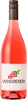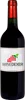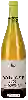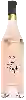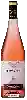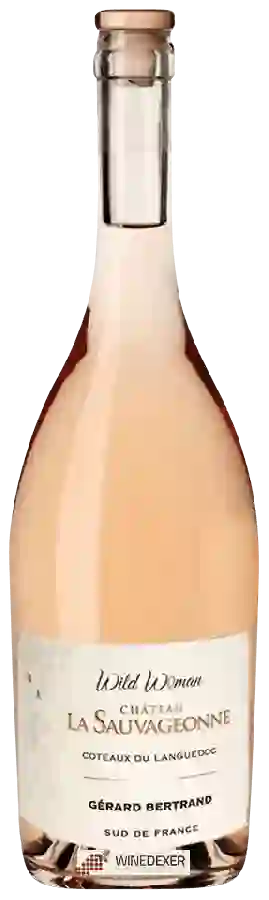
Château La SauvageonneRosé
 Pink wine


In the mouth this pink wine is a with a nice freshness.
This wine generally goes well with vegetarian, appetizers and snacks or lean fish.
Taste structure of the Rosé from the Château La Sauvageonne
Light | Bold | |
Dry | Sweet | |
Soft | Acidic |
In the mouth the Rosé of Château La Sauvageonne in the region of Languedoc-Roussillon is a with a nice freshness.
Wine flavors and olphactive analysis


On the nose the Rosé of Château La Sauvageonne in the region of Languedoc-Roussillon often reveals types of flavors of strawberries, oak or tree fruit and sometimes also flavors of red fruit.
Food and wine pairings with Rosé
Pairings that work perfectly with Rosé



Original food and wine pairings with Rosé


The Rosé of Château La Sauvageonne matches generally quite well with dishes of pasta, vegetarian or appetizers and snacks such as recipes of seafood lasagna, light tuna-tomato quiche (without cream) or cervelat in the alsatian style.
Details and technical informations about Château La Sauvageonne's Rosé.
Discover the grape variety: Bombino blanc
This grape variety was originally cultivated in the south of Italy, in the region of Puglia to be precise. Today, it can be found in many other Italian wine regions, including Abruzzo, Lazio, Marche, Emilia-Romagna, etc. In France, it is almost unknown. It certainly has many relatives of Italian origin, known or less known, without us being able to cite them with certainty, especially since we find identical synonyms for them. However, we can affirm that the Trebbiano of Abruzzo is not the white Bombino and that the black Bombino is not related to the white.
Last vintages of this wine

The best vintages of Rosé from Château La Sauvageonne are 2016, 2015, 2014
Informations about the Château La Sauvageonne
The Château La Sauvageonne is one of of the world's greatest estates. It offers 15 wines for sale in the of Languedoc to come and discover on site or to buy online.

The wine region of Languedoc
Languedoc (formerly Coteaux du Languedoc) is a key appellation used in the Languedoc-Roussillon wine region of southern France. It covers Dry table wines of all three colors (red, white and rosé) from the entire region, but leaves Sweet and Sparkling wines to other more specialized appellations. About 75% of all Languedoc wines are red, with the remaining 25% split roughly down the middle between whites and rosés. The appellation covers most of the Languedoc region and almost a third of all the vineyards in France.
The wine region of Languedoc-Roussillon
Languedoc (formerly Coteaux du Languedoc) is a key appellation used in the Languedoc-Roussillon wine region of southern France. It covers Dry table wines of all three colors (red, white and rosé) from the entire region, but leaves Sweet and Sparkling wines to other more specialized appellations. About 75% of all Languedoc wines are red, with the remaining 25% split roughly down the middle between whites and rosés. The appellation covers most of the Languedoc region and almost a third of all the vineyards in France.
The word of the wine: Grafting
A method used since the phylloxera crisis, consisting of fixing a graft of local origin on a rootstock resistant to phylloxera.