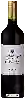
Château La GardeFronsac
 Red wine


In the mouth this red wine is a powerful.
This wine generally goes well with poultry, beef or game (deer, venison).

Taste structure of the Fronsac from the Château La Garde
Light | Bold | |
Smooth | Tannic | |
Dry | Sweet | |
Soft | Acidic |
In the mouth the Fronsac of Château La Garde in the region of Bordeaux is a powerful.
Food and wine pairings with Fronsac
Pairings that work perfectly with Fronsac



Original food and wine pairings with Fronsac

The Fronsac of Château La Garde matches generally quite well with dishes of beef, lamb or game (deer, venison) such as recipes of roast beef with garlic, lamb chops with figs and honey or rabbit and mushroom gibelotte.
Details and technical informations about Château La Garde's Fronsac.
Discover the grape variety: Regent
Richly coloured and structured reds with a deep purple colour and supple tannins, on aromas of blackcurrant, blackberry, plum, spices and discreet herbal notes. Round palate, fruity finish. A disease-resistant hybrid (downy and powdery mildew), it produces modern organic reds in Germany (Rheinhessen, Palatinate), Switzerland, Belgium and the Netherlands. Created in 1967 at Geilweilerhof by Gerhardt Alleweldt.
Informations about the Château La Garde
The Château La Garde is one of of the world's greatest estates. It offers 2 wines for sale in the of Fronsac to come and discover on site or to buy online.

The wine region of Fronsac
Bordeaux AOC on the right bank of the Dordogne at the gates of Libourne: Merlot reigns in red (~80%) with Cabernet Franc — intense, distinguished nose with signature notes of black cherry, raspberry, blackberry, plum, pepper and a spice box, full-bodied palate with firm yet never aggressive tannins evolving toward undergrowth, leather, tobacco and truffle, silky texture with age. AOC (1937), ~830 ha over 7 communes, hilly terroir of 'Fronsadais' limestone molasse and clay-limestone.
The wine region of Bordeaux
World-renowned age-worthy reds, led by round Merlot (plum, black fruit) or firm Cabernet Sauvignon (blackcurrant, cedar, graphite), blended with Cabernet Franc and Petit Verdot for tannic structure. Structured Médoc and Graves, velvety Saint-Émilion and Pomerol. Also crisp dry whites (Sauvignon/Sémillon) and opulent sweet Sauternes with honey and candied fruit. A 110,000 ha Gironde vineyard, 65 appellations, cradle of the 1855 classified growths.
The word of the wine: PGI
Protected geographical indication. Equivalent to vin de pays in European regulations.