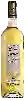
Château GrinouSémillon Moelleux
 Sweet wine
This wine generally goes well with poultry, rich fish (salmon, tuna etc) or shellfish.

Food and wine pairings with Sémillon Moelleux
Pairings that work perfectly with Sémillon Moelleux



Original food and wine pairings with Sémillon Moelleux

The Sémillon Moelleux of Château Grinou matches generally quite well with dishes of rich fish (salmon, tuna etc), shellfish or sweet desserts such as recipes of steamed salmon marinated in herbs, festive sea pot or king's cake with frangipane.
Details and technical informations about Château Grinou's Sémillon Moelleux.
Discover the grape variety: Couderc noir
Simple, fruity reds with a colourful ruby robe, light tannins and unassertive aromas of red and black fruits with herbaceous, foxy notes typical of hybrid grapes. A rustic phylloxera-resistant profile. Now marginal, it survives in a few French parcels and ampelographic collections, a witness to post-phylloxera hybridisation.
Informations about the Château Grinou
The Château Grinou is one of of the world's great estates. It offers 29 wines for sale in the of Guyenne to come and discover on site or to buy online.

The wine region of Guyenne
Atlantic IGP of the Southwest across 5 departments (Gironde, Dordogne, Lot-et-Garonne, Landes, Pyrénées-Atlantiques). Bordeaux varieties as signatures. Merlot in red: supple and accessible with signature notes of plum, ripe cherry, light cocoa and a herbaceous touch, round tannins and fruity palate — affordable alternative to Bordeaux AOCs. Peppery Cabernet Franc, firm Cabernet Sauvignon, dense Côt.
The wine region of South West
French mosaic of strong identities south of Bordeaux. Cahors and its Malbec ("black wine"): deep reds with notes of blackberry, plum, violet, tobacco and cocoa, firm tannins. Madiran and its dense, age-worthy Tannat. Jurançon whites: golden sweet (apricot, honey, pineapple) and lively dry from Petit Manseng.
The word of the wine: Noble rot
A fungus called botrytis cinerea that develops during the over-ripening phase, an ally of great sweet white wines, when it concentrates the juice of the berries. It requires the humidity of morning fogs and beautiful sunny days, gives musts very rich in sugar and brings to the wines the famous taste of "roasted".