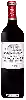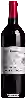
Château de MonturonLes Portraits Saint-Émilion Grand Cru
 Red wine
This wine generally goes well with poultry, beef or game (deer, venison).
Food and wine pairings with Les Portraits Saint-Émilion Grand Cru
Pairings that work perfectly with Les Portraits Saint-Émilion Grand Cru



Original food and wine pairings with Les Portraits Saint-Émilion Grand Cru

The Les Portraits Saint-Émilion Grand Cru of Château de Monturon matches generally quite well with dishes of beef, lamb or game (deer, venison) such as recipes of beef and spice stuffed peppers, roast lamb with thyme or rabbit on the barbecue.
Details and technical informations about Château de Monturon's Les Portraits Saint-Émilion Grand Cru.
Discover the grape variety: Baroque
From a morphological point of view, Baroque seems to have common origins with Tannat. Still called Blanc Bordelais, this white grape variety is distinguished essentially by the characteristics of its leaves. Those that are still young are both yellowish and downy. Their bumps have a somewhat bronzed appearance. The adult leaves have angular teeth. The leaves are not very three-lobed and have a pubescent, downy blade. The Baroque is grown in the Adour basin, mainly in Tursan and in certain vineyards in the Gers. Its production area is therefore not very large. This grape variety manages to resist oidium, unlike other varieties, and its harvest must be well done and free of rot. The harvest must be well done and free of rot, which leads to a better result and a more successful wine production. Moreover, the development of Baroque must be slowed down in time, bearing in mind that this type of grape variety only matures about twenty days after Chasselas.
Informations about the Château de Monturon
The Château de Monturon is one of of the world's greatest estates. It offers 5 wines for sale in the of Saint-Émilion Grand Cru to come and discover on site or to buy online.

The wine region of Saint-Émilion Grand Cru
The wine region of Saint-Émilion Grand Cru is located in the region of Saint-Émilion of Bordeaux of France. Wineries and vineyards like the Château Cheval Blanc or the Château Ausone produce mainly wines red. The most planted grape varieties in the region of Saint-Émilion Grand Cru are Merlot, Cabernet franc and Cabernet-Sauvignon, they are then used in wines in blends or as a single variety. On the nose of Saint-Émilion Grand Cru often reveals types of flavors of cherry, dill or tropical fruit and sometimes also flavors of aniseed, hay or honey.
The wine region of Bordeaux
Bordeaux, in southwestern France, is one of the most famous, prestigious and prolific wine regions in the world. The majority of Bordeaux wines (nearly 90% of the production Volume) are the Dry, medium and Full-bodied red Bordeaux blends for which it is famous. The finest (and most expensive) are the wines of the great châteaux of Haut-Médoc and the right bank appellations of Saint-Émilion and Pomerol. The former focuses (at the highest level) on Cabernet Sauvignon, the latter on Merlot.
The word of the wine: Malolactic fermentation
Called second fermentation or malo for short. It is the degradation (under the effect of bacteria) of the malic acid naturally present in the wine into milder, less aggressive lactic acid. Some producers or wineries refuse this operation by "blocking the malo" (by cold and adding SO2) to keep a maximum of acidity which carries the aromas and accentuates the sensation of freshness.