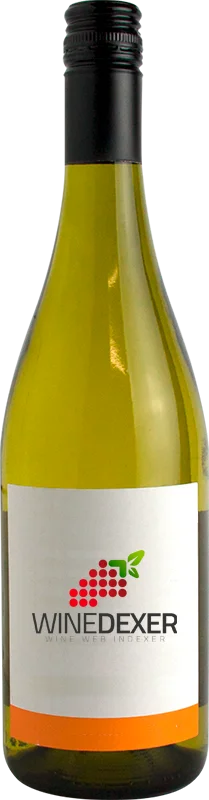
Château de CalceRivesaltes Tuile Doux Naturel
 Natural sweet wine



This wine generally goes well with beef and mature and hard cheese.
Food and wine pairings with Rivesaltes Tuile Doux Naturel
Pairings that work perfectly with Rivesaltes Tuile Doux Naturel


Original food and wine pairings with Rivesaltes Tuile Doux Naturel
The Rivesaltes Tuile Doux Naturel of Château de Calce matches generally quite well with dishes of beef or mature and hard cheese such as recipes of spaghetti squash bolognese style or tuna-kiri crisps.
Details and technical informations about Château de Calce's Rivesaltes Tuile Doux Naturel.
Discover the grape variety: Iona
It is said to come from a seedling of diana - the latter is also a seedling of catawba - and propagated in 1860 by Dr. C.W. Grant, the introduction in the United States would date from 1863. Other ampelographers give it as coming directly from a seedling of catawba. The only certainty is that it is an interspecific cross with Vitis Labrusca as a parent. It should be noted that it is the parent of the diamond and the golden muscat. Iona can be found in the United States, Canada, New Zealand, etc. In France it is totally unknown. This variety can only be of interest to amateur gardeners, on the one hand to enlarge their collections and on the other hand, because it produces an excellent juice.
Last vintages of this wine
The best vintages of Rivesaltes Tuile Doux Naturel from Château de Calce are 0, 2010
Informations about the Château de Calce
The Château de Calce is one of of the world's greatest estates. It offers 11 wines for sale in the of Rivesaltes to come and discover on site or to buy online.

The wine region of Rivesaltes
Rivesaltes is an appellation for the historic Sweet wines of eastern Roussillon, in the DeepSouth of France. The natural sweet wines produced in this region have been revered since at least the 14th century. The technique used to make them is one of many techniques used for sweet wines. Unlike botrytized wines or ice wines, natural sweet wines are made by Mutage, a process that involves stopping the Fermentation of the must while a high level of natural sweetness remains.
The wine region of Languedoc-Roussillon
Languedoc (formerly Coteaux du Languedoc) is a key appellation used in the Languedoc-Roussillon wine region of southern France. It covers Dry table wines of all three colors (red, white and rosé) from the entire region, but leaves Sweet and Sparkling wines to other more specialized appellations. About 75% of all Languedoc wines are red, with the remaining 25% split roughly down the middle between whites and rosés. The appellation covers most of the Languedoc region and almost a third of all the vineyards in France.
The word of the wine: Disorder
Said of a wine that is not clear due to the presence of colloidal suspensions that prevent the passage of light.