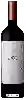
Château Conte-GrandBonarda
 Red wine



In the mouth this red wine is a with a nice freshness.
This wine generally goes well with pork, poultry or veal.
Taste structure of the Bonarda from the Château Conte-Grand
Light | Bold | |
Smooth | Tannic | |
Dry | Sweet | |
Soft | Acidic |
In the mouth the Bonarda of Château Conte-Grand in the region of San Juan is a with a nice freshness.
Food and wine pairings with Bonarda
Pairings that work perfectly with Bonarda



Original food and wine pairings with Bonarda

The Bonarda of Château Conte-Grand matches generally quite well with dishes of veal, pork or game (deer, venison) such as recipes of veal chop with mushrooms, flamenkuche express or blanquette of rabbit with riesling and chanterelles.
Details and technical informations about Château Conte-Grand's Bonarda.
Discover the grape variety: Big Muscat seedless
Variety of Argentinean origin.
Last vintages of this wine
The best vintages of Bonarda from Château Conte-Grand are 0
Informations about the Château Conte-Grand
The Château Conte-Grand is one of of the world's greatest estates. It offers 5 wines for sale in the of San Juan to come and discover on site or to buy online.

The wine region of San Juan
San Juan is an important Argentinean wine-producing area, producing wines of increasing quality using traditional European Grape varieties. The wine region of San Juan covers the administrative area of the same name in the north-western corner of Argentina. The province sits between Mendoza and La Rioja, and is almost entirely contained within the mountainous foothills of the Andes. In terms of production Volume, San Juan is Argentina's second-largest wine region after Mendoza.
The word of the wine: Local wine
Table wine, but with the origin indicated. It corresponds to a particular legislation: the freedom to use grape varieties is greater than for the AOC, but the quality criteria such as the approval tastings can sometimes be more demanding. The legislation is still evolving, but for the moment there are three levels: regional (e.g. Vin de Pays d'Oc), departmental and local (e.g. Côtes de Thongue).