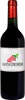
Château Bon BaronAcolon
 Red wine



This wine generally goes well with
The Acolon of the Château Bon Baron is in the top 30 of wines of Belgium and in the top 10 of wines of Côtes de Sambre et Meuse.
Wine flavors and olphactive analysis




On the nose the Acolon of Château Bon Baron in the region of Wallonie often reveals types of flavors of cherry, oaky or butter and sometimes also flavors of blackberry, red fruit or raspberry.
Details and technical informations about Château Bon Baron's Acolon.
Discover the grape variety: Victoria
An intraspecific cross between the cardinal and the Beirut date tree - the latter also bears the synonyms afuz (or afus) ali or regina - obtained in 1964 by Victoria Lepadatu and Gheorghe Condei of the Horticultural Research Institute of Dragasani (Romania). It should be noted that a Russian variety of table grape bears the same name, but it is unlikely to be confused with it because its berries are purplish pink to dark red when fully ripe. Victoria is found in Italy, Austria, Greece, Bulgaria, Romania, South Africa... almost unknown in France, registered in the Official Catalogue of table grape varieties, list A2.
Last vintages of this wine
The best vintages of Acolon from Château Bon Baron are 2011, 2014, 2010, 2016 and 2015.
Informations about the Château Bon Baron
The Château Bon Baron is one of of the world's greatest estates. It offers 36 wines for sale in the of Côtes de Sambre et Meuse to come and discover on site or to buy online.

The wine region of Côtes de Sambre et Meuse
Côtes de Sambre et Meuse wines are wines from the Walloon Region in Belgium. Their quality is recognized as an appellation of controlled origin. About sixty owners and 27 vineyards listed by the Belgian federation of wines and spirits total about thirty hectares of vines. This represents between 75 and 80 000 vines for an annual production of 800 to 900 hectoliters.
The wine region of Wallonie
In 2004, the local wines of the Gardens of Wallonia joined the circle of products labeled with a Protected Geographical Indication.
The word of the wine: Flavours
There are generally four so-called fundamental flavours: acidity, bitterness, sweetness and saltiness. The first three are considered to be the building blocks of the structure of wines. They are perceived by the taste buds that cover the surface of the tongue.