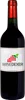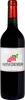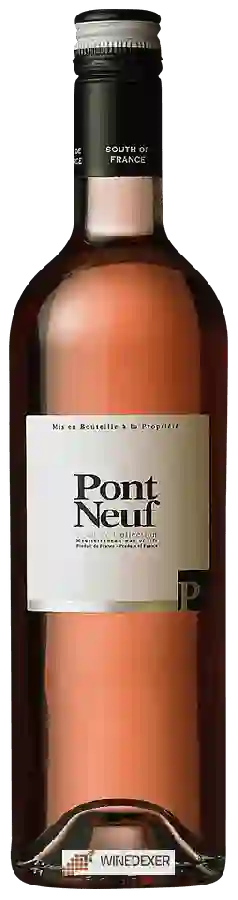
Cave des Saint-SaturninPont Neuf Prestige Collection Rosé
 Pink wine



This wine generally goes well with beef, mature and hard cheese or spicy food.

Food and wine pairings with Pont Neuf Prestige Collection Rosé
Pairings that work perfectly with Pont Neuf Prestige Collection Rosé



Original food and wine pairings with Pont Neuf Prestige Collection Rosé
The Pont Neuf Prestige Collection Rosé of Cave des Saint-Saturnin matches generally quite well with dishes of beef, spicy food or mature and hard cheese such as recipes of beef fashion, crab matoutou or country-style sausage.
Details and technical informations about Cave des Saint-Saturnin's Pont Neuf Prestige Collection Rosé.
Discover the grape variety: Gamay de Chaudenay
Intensely coloured, simple reds with an opaque purple robe (red pulp), supple tannins and a light palate with moderate acidity, featuring discreet aromas of red fruits. Teinturier profile. Once used to intensify the colour of blends, now marginal and surviving in a few plots in Beaujolais and Burgundy as well as in ampelographic collections. Teinturier mutation of Gamay, obtained at Chaudenay in the 19th century.
Last vintages of this wine
The best vintages of Pont Neuf Prestige Collection Rosé from Cave des Saint-Saturnin are 2016, 2014, 2018, 2017
Informations about the Cave des Saint-Saturnin
The Cave des Saint-Saturnin is one of of the world's greatest estates. It offers 97 wines for sale in the of Méditerranée to come and discover on site or to buy online.

The wine region of Méditerranée
Vast IGP of south-east France (Provence, Vaucluse, Var, Corsica, Ardèche), 75% rosés. Fresh, fruity rosés with signature notes of strawberry, raspberry, citrus, white flowers and a Mediterranean touch, taut and thirst-quenching on the palate — the quintessential sunny aperitif. Supple reds blending Grenache, Syrah, Cabernet and Merlot (red fruits, garrigue, spice), full whites of Viognier (apricot, flowers) and Chardonnay. Generous everyday wines, expression of the south.
The word of the wine: Runoff
Failure of the vine flower to fertilize at the time of flowering, when the weather is too cold or rainy. Under these conditions, the vine will have few or no clusters.