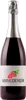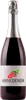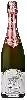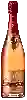
Cave de BeblenheimBlack Rose Cremant d'Alsace Brut Rosé
 Sparkling wine
In the mouth this sparkling wine is a powerful with a nice vivacity and a fine and pleasant bubble.
This wine generally goes well with poultry, appetizers and snacks or lean fish.
Taste structure of the Black Rose Cremant d'Alsace Brut Rosé from the Cave de Beblenheim
Light | Bold | |
Soft | Acidic | |
Gentle | Fizzy |
In the mouth the Black Rose Cremant d'Alsace Brut Rosé of Cave de Beblenheim in the region of Alsace is a powerful with a nice vivacity and a fine and pleasant bubble.
Food and wine pairings with Black Rose Cremant d'Alsace Brut Rosé
Pairings that work perfectly with Black Rose Cremant d'Alsace Brut Rosé



Original food and wine pairings with Black Rose Cremant d'Alsace Brut Rosé


The Black Rose Cremant d'Alsace Brut Rosé of Cave de Beblenheim matches generally quite well with dishes of shellfish, poultry or appetizers and snacks such as recipes of lobster armorican style, leek, goat cheese and bacon quiche or mini burgers.
Details and technical informations about Cave de Beblenheim's Black Rose Cremant d'Alsace Brut Rosé.
Discover the grape variety: Baroque
From a morphological point of view, Baroque seems to have common origins with Tannat. Still called Blanc Bordelais, this white grape variety is distinguished essentially by the characteristics of its leaves. Those that are still young are both yellowish and downy. Their bumps have a somewhat bronzed appearance. The adult leaves have angular teeth. The leaves are not very three-lobed and have a pubescent, downy blade. The Baroque is grown in the Adour basin, mainly in Tursan and in certain vineyards in the Gers. Its production area is therefore not very large. This grape variety manages to resist oidium, unlike other varieties, and its harvest must be well done and free of rot. The harvest must be well done and free of rot, which leads to a better result and a more successful wine production. Moreover, the development of Baroque must be slowed down in time, bearing in mind that this type of grape variety only matures about twenty days after Chasselas.
Informations about the Cave de Beblenheim
The Cave de Beblenheim is one of of the world's great estates. It offers 167 wines for sale in the of Crémant d'Alsace to come and discover on site or to buy online.

The wine region of Crémant d'Alsace
Crémant d'Alsace is the appellation for white and rosé Sparkling wines from the Alsace wine region in northeastern France. Introduced in August 1976, the appellation now accounts for about a quarter of the region's production, or about 45 million bottles per year, up from 31 million in 2009. Outside of Champagne (240km to the west), it is the dominant French sparkling wine appellation, with more than half of all crémant production. The cooperatives are the most important players, with Wolfberger alone producing 6 to 7 million bottles.
The wine region of Alsace
Alsace, located in the extreme north-east of France, is Distinguished from other French wine regions by its strong Franco-Germanic influences. These influences are the result of a back-and-forth between the German and French sovereignties over the last few centuries. They can be seen not only in the architecture and culture of Alsace, but also in the wines. Alsace wines are produced under three main appellations: Alsace and Alsace Grand Cru for still white wines (Sweet and Dry), and Crémant d'Alsace for Sparkling wines.
The word of the wine: Deposit
Solid particles that can naturally coat the bottom of a bottle of wine. It is rather a guarantee that the wine has not been mistreated: in fact, to avoid the natural deposit, rather violent processes of filtration or cold passage (- 7 or - 8 °C) are used in order to precipitate the tartar (the small white crystals that some people confuse with crystallized sugar: just taste to dissuade you from it)