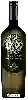
Winery Casa SetaroMinos
 White wine


In the mouth this white wine is a powerful.
This wine generally goes well with vegetarian, appetizers and snacks or shellfish.
Taste structure of the Minos from the Winery Casa Setaro
Light | Bold | |
Dry | Sweet | |
Soft | Acidic |
In the mouth the Minos of Winery Casa Setaro in the region of Campania is a powerful.
Food and wine pairings with Minos
Pairings that work perfectly with Minos



Original food and wine pairings with Minos
The Minos of Winery Casa Setaro matches generally quite well with dishes of shellfish, vegetarian or appetizers and snacks such as recipes of shrimp in red sauce, quiche without pastry, courgette and blue cheese or cream of asparagus soup in verrines.
Details and technical informations about Winery Casa Setaro's Minos.
Discover the grape variety: Clinton
A natural hybrid, most likely resulting from an interspecific cross between Vitis Riparia and Vitis Labrusca, first planted by Hugh White in College Hill, USA. In France, it is one of the six hybrids prohibited since 1935 (included in European regulations): Clinton, herbemont, isabelle, jacquez, noah and othello. It should be noted that it was used for a very long time as a rootstock, today it can still be found in arbors and trellises raised in private homes, our photographs were taken in the Cevennes.
Last vintages of this wine
The best vintages of Minos from Winery Casa Setaro are 0
Informations about the Winery Casa Setaro
The Winery Casa Setaro is one of of the world's great estates. It offers 19 wines for sale in the of Campania to come and discover on site or to buy online.

The wine region of Campania
Campania is a region that forms the "tibia" of the boot of Italy, and whose largest city is Naples. Its name comes from Campania felix, a Latin phrase meaning roughly "happy land". The region has strong historical links with wine and vineyards, dating back to the 12th century BC, and is one of the oldest wine regions in Italy. The considerable influence of ancient empires, including the Greeks, Romans and Byzantines, means that some of the varieties in this region are linked to historical legends.
The word of the wine: Pommadé
Said of a wine that is unbalanced, pasty, syrupy, and whose excessive sugar content gives an impression of heaviness.