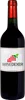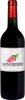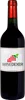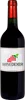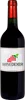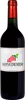
Winery Casa RestolhoBairro Mouraria Tinto
 Red wine



In the mouth this red wine is a powerful.
This wine generally goes well with poultry, beef or veal.
The Bairro Mouraria Tinto of the Winery Casa Restolho is in the top 30 of wines of Lisboa.
Taste structure of the Bairro Mouraria Tinto from the Winery Casa Restolho
Light | Bold | |
Smooth | Tannic | |
Dry | Sweet | |
Soft | Acidic |
In the mouth the Bairro Mouraria Tinto of Winery Casa Restolho in the region of Lisboa is a powerful.
Food and wine pairings with Bairro Mouraria Tinto
Pairings that work perfectly with Bairro Mouraria Tinto



Original food and wine pairings with Bairro Mouraria Tinto

The Bairro Mouraria Tinto of Winery Casa Restolho matches generally quite well with dishes of beef, pasta or veal such as recipes of southern beef meatballs, pasta alla norma or country-style veal roulades with risotto.
Details and technical informations about Winery Casa Restolho's Bairro Mouraria Tinto.
Discover the grape variety: Flame seedless
Apyrene variety of table grapes obtained in 1961 in the United States (California) by John H. Weinberger and F.N. Harmon by complex crossing between (cardinal x sultanin) x [(molinera gorda x tifafihi ahmer ) x (muscat of Alexandria x sultanin)] and put in culture in 1973. It should be noted that the white Fresno seedless is the result of the same cross made by the same breeders. It can be found in Australia, Chile, Argentina, South Africa, Morocco, Tunisia, Spain, Portugal, Italy, Bulgaria, the United States (California) where it occupies a large area, etc. In France it is practically unknown, although it is registered in the Official Catalogue of table grape varieties, list A2.
Last vintages of this wine
The best vintages of Bairro Mouraria Tinto from Winery Casa Restolho are 2013, 0, 2017
Informations about the Winery Casa Restolho
The Winery Casa Restolho is one of of the world's greatest estates. It offers 10 wines for sale in the of Lisboa to come and discover on site or to buy online.

The wine region of Lisboa
Lisboa (formerly Estremadura) is a prolific wine region located at the Center of Portugal's Atlantic coast. Despite being one of the country's most productive winemaking areas, its name remains relatively obscure in wine terms, as its wines have traditionally been labeled with the names of the local sub-regions, which include Alenquer, Bucelas and Colares. The region is also home to Portugal's capital, Lisbon. The region fell under the VR (Vinho Regional) classification until 2008, when the category was renamed IGP (Indicaciones Geográficas Protegidas) to bring it into line with the rest of Europe.
The word of the wine: Castle
A term often used to designate wineries, even if they do not have a real castle.