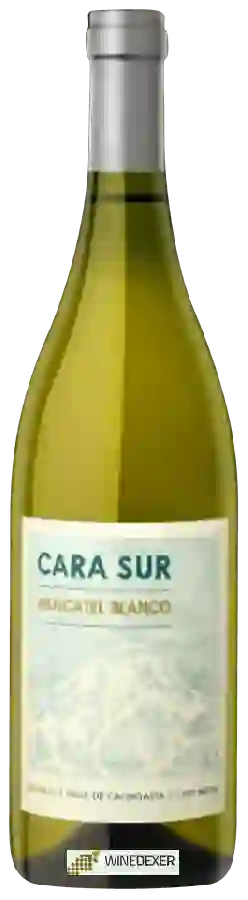
Winery Cara SurMoscatel Blanco
 White wine



This wine generally goes well with spicy food and sweet desserts.

Wine flavors and olphactive analysis

On the nose the Moscatel Blanco of Winery Cara Sur in the region of San Juan often reveals types of flavors of earth, tree fruit or citrus fruit.
Food and wine pairings with Moscatel Blanco
Pairings that work perfectly with Moscatel Blanco


Original food and wine pairings with Moscatel Blanco
The Moscatel Blanco of Winery Cara Sur matches generally quite well with dishes of spicy food or sweet desserts such as recipes of chicken colombo (west indies) or birthday cake.
Details and technical informations about Winery Cara Sur's Moscatel Blanco.
Discover the grape variety: Irsai Oliver
Aromatic, fresh whites to drink young, with a pale golden colour, an airy palate, and explosive muscat signature aromas of rose, yellow fruits (peach), white flowers and fruity notes. Early-ripening. Grown in Hungary, Slovakia and the Czech Republic for aromatic dry and off-dry whites. A Hungarian white variety bred in 1930 by Pál Kocsis (Pozsonyi fehér × Pearl of Csaba), also known as Oliver Irsay.
Last vintages of this wine
The best vintages of Moscatel Blanco from Winery Cara Sur are 2019, 2018, 0, 2016
Informations about the Winery Cara Sur
The Winery Cara Sur is one of of the world's greatest estates. It offers 11 wines for sale in the of San Juan to come and discover on site or to buy online.

The wine region of San Juan
Argentina's 2nd province by volume, a very sunny Andean oasis (<30 cloudy days/year). Signature Syrah (~22% of Argentine Syrah): intense, sun-drenched reds with signature notes of blackberry, black plum, pepper, olive, violet and sweet spice, round tannins and vivid fruit. Also fleshy Malbec, supple Bonarda, spicy Tempranillo. Floral, muscat Torrontes and ample Chardonnay in white.
The word of the wine: Disorder
Said of a wine that is not clear due to the presence of colloidal suspensions that prevent the passage of light.