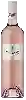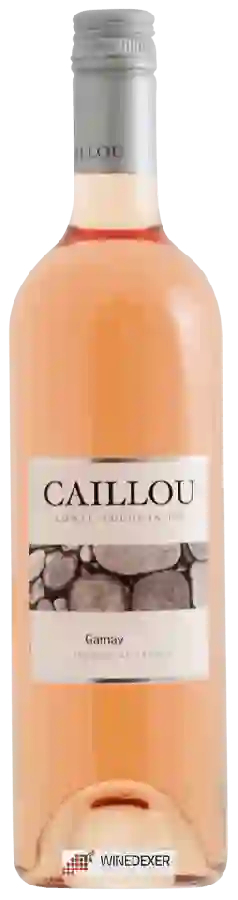
Winery CaillouGamay Rosé
 Pink wine



This wine generally goes well with beef

Food and wine pairings with Gamay Rosé
Pairings that work perfectly with Gamay Rosé

Original food and wine pairings with Gamay Rosé
The Gamay Rosé of Winery Caillou matches generally quite well with dishes of beef such as recipes of cabri en colombo with creole sauce.
Details and technical informations about Winery Caillou's Gamay Rosé.
Discover the grape variety: Gamay noir
Light, juicy reds, low in tannins with crunchy freshness, showing aromas of wild strawberry, raspberry, banana (from carbonic maceration) and peony. Easy-drinking style of Beaujolais Nouveau, more structured and mineral on the granites of the ten crus (Morgon, Moulin-à-Vent, Fleurie, Brouilly). Also in Touraine, Auvergne and Swiss Romande. A Burgundian variety, a cross of Pinot Noir × Gouais Blanc.
Last vintages of this wine
The best vintages of Gamay Rosé from Winery Caillou are 2018, 2017, 2016
Informations about the Winery Caillou
The Winery Caillou is one of of the world's greatest estates. It offers 3 wines for sale in the of Comté Tolosan to come and discover on site or to buy online.

The wine region of Comté Tolosan
IGP covering all of southwest France across 12 departments, a broad and accessible palette. On the Garonne right bank, supple reds dominate: signature Merlot with signature notes of plum, ripe cherry, cocoa and a herbaceous touch, round tannins. Firm Cabernet, spicy Syrah, tannic local Tannat. Left bank for whites: vivid Colombard and Gros Manseng (citrus, grapefruit, exotic fruits), aromatic Sauvignon.
The word of the wine: Cuvée (champagne)
Juice harvested during the first pressing. The term "cuvée" is also used to describe the final blend of wines of a given quality. Tête de cuvée : the first juice to come out during the first pressing.