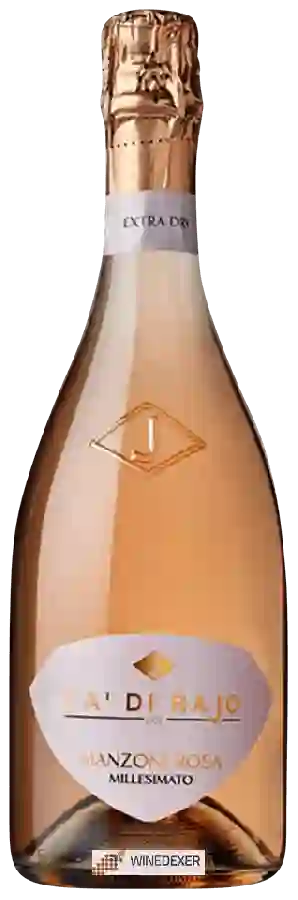
Winery Ca' di RajoManzoni Rosa Millesimato
 Sparkling wine



This wine generally goes well with
Wine flavors and olphactive analysis




On the nose the Manzoni Rosa Millesimato of Winery Ca' di Rajo in the region of Veneto often reveals types of flavors of earth, microbio or oak and sometimes also flavors of tree fruit, red fruit.
Details and technical informations about Winery Ca' di Rajo's Manzoni Rosa Millesimato.
Discover the grape variety: Albillo mayor
Very old Spanish grape variety originating and cultivated in the upper Douro Valley - Ribera del Duero province of Burgos -. It is believed to be the result of a natural cross between the white Heben and a variety that is still unknown today. It should be noted that the synonym albillo is used for many other grape varieties, such as chasselas, muscat of Alexandria or albillo de Toro, verdejo or albillo de Nava, ... and it should not be confused with torrontés riojano. You can find the Albillo mayor in Italy, Spain, Portugal, Peru, Chile, Bulgaria, ... completely unknown in France.
Last vintages of this wine
The best vintages of Manzoni Rosa Millesimato from Winery Ca' di Rajo are 2019, 2018, 0, 2016 and 1931.
Informations about the Winery Ca' di Rajo
The Winery Ca' di Rajo is one of of the world's greatest estates. It offers 43 wines for sale in the of Veneto to come and discover on site or to buy online.

The wine region of Veneto
Veneto is an important and growing wine region in northeastern Italy. Veneto is administratively Part of the Triveneto area, aLong with its smaller neighbors, Trentino-Alto Adige and Friuli-Venezia Giulia. In terms of geography, culture and wine styles, it represents a transition from the Alpine and Germanic-Slavic end of Italy to the warmer, drier, more Roman lands to the South. Veneto is slightly smaller than the other major Italian wine regions - Piedmont, Tuscany, Lombardy, Puglia and Sicily - but it produces more wine than any of them.
The word of the wine: Juice
The juice of wine grapes (intended for wine making) is colourless. It is the anthocyanins contained in the grape skin that colour the juice during maceration.