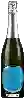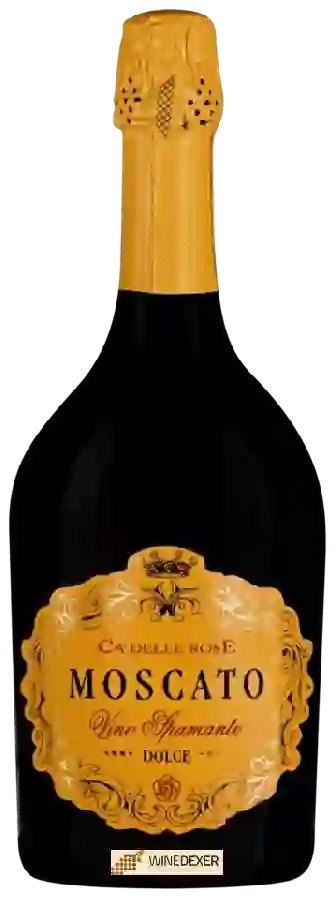
Winery Ca'Delle RoseMoscato Dolce
 Sparkling wine


This wine generally goes well with sweet desserts
Food and wine pairings with Moscato Dolce
Pairings that work perfectly with Moscato Dolce

Original food and wine pairings with Moscato Dolce
The Moscato Dolce of Winery Ca'Delle Rose matches generally quite well with dishes of sweet desserts such as recipes of french toast.
Details and technical informations about Winery Ca'Delle Rose's Moscato Dolce.
Discover the grape variety: Arbane
Arbane or arbanne is a very old white grape variety from the north/east of France, coming from the Aube and more precisely from the Champagne region. The Comité Interprofessionnel des Vins de Champagne wishes to preserve the use of traditional grape varieties of Champagne. The Arbane is a small bunch of grapes with small berries and a very sweet pulp, a late variety that needs sun and heat to concentrate all its sugars. It gives a wine rich in alcohol, elegant and nervous, with a floral nose and a nice acidity.
Last vintages of this wine
The best vintages of Moscato Dolce from Winery Ca'Delle Rose are 0
Informations about the Winery Ca'Delle Rose
The Winery Ca'Delle Rose is one of of the world's great estates. It offers 37 wines for sale in the of Veneto to come and discover on site or to buy online.

The wine region of Veneto
Veneto is an important and growing wine region in northeastern Italy. Veneto is administratively Part of the Triveneto area, aLong with its smaller neighbors, Trentino-Alto Adige and Friuli-Venezia Giulia. In terms of geography, culture and wine styles, it represents a transition from the Alpine and Germanic-Slavic end of Italy to the warmer, drier, more Roman lands to the South. Veneto is slightly smaller than the other major Italian wine regions - Piedmont, Tuscany, Lombardy, Puglia and Sicily - but it produces more wine than any of them.
The word of the wine: Racé
Character of a great wine remarkable for its elegance and finesse.