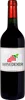
Winery BrugnaraSebastian
 Red wine
In the mouth this red wine is a powerful.
This wine generally goes well with beef, game (deer, venison) or lamb.
Taste structure of the Sebastian from the Winery Brugnara
Light | Bold | |
Smooth | Tannic | |
Dry | Sweet | |
Soft | Acidic |
In the mouth the Sebastian of Winery Brugnara in the region of Trentino-Alto-Adige is a powerful.
Food and wine pairings with Sebastian
Pairings that work perfectly with Sebastian



Original food and wine pairings with Sebastian

The Sebastian of Winery Brugnara matches generally quite well with dishes of beef, pasta or lamb such as recipes of roast beef in a crust (onions & mustard), goat cheese and spinach lasagne or moroccan style leg of lamb.
Details and technical informations about Winery Brugnara's Sebastian.
Discover the grape variety: Victoria
An intraspecific cross between the cardinal and the Beirut date tree - the latter also bears the synonyms afuz (or afus) ali or regina - obtained in 1964 by Victoria Lepadatu and Gheorghe Condei of the Horticultural Research Institute of Dragasani (Romania). It should be noted that a Russian variety of table grape bears the same name, but it is unlikely to be confused with it because its berries are purplish pink to dark red when fully ripe. Victoria is found in Italy, Austria, Greece, Bulgaria, Romania, South Africa... almost unknown in France, registered in the Official Catalogue of table grape varieties, list A2.
Informations about the Winery Brugnara
The Winery Brugnara is one of of the world's greatest estates. It offers 10 wines for sale in the of Trentino-Alto-Adige to come and discover on site or to buy online.

The wine region of Trentino-Alto-Adige
Trentino-Alto Adige is Italy's northernmost wine region, located right on the border with Austria. Production was once dominated by the local red varieties Lagrein and Schiava. Now white wines are becoming more important in terms of Volume. Increasingly, they are made from internationally renowned Grape varieties such as Pinot Grigio and Chardonnay.
The word of the wine: Rosé (champagne)
Unique rosé wine made by blending white wine with a small amount of red Champagne. It is however possible to vinify the must directly into rosé.