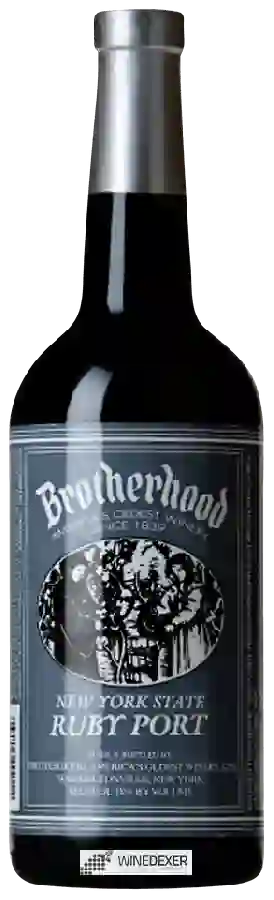
Winery BrotherhoodRuby Port
 Natural sweet wine


This wine generally goes well with
The Ruby Port of the Winery Brotherhood is in the top 10 of wines of New York.
Wine flavors and olphactive analysis


On the nose the Ruby Port of Winery Brotherhood in the region of New York often reveals types of flavors of microbio, oak.
Details and technical informations about Winery Brotherhood's Ruby Port.
Discover the grape variety: Calitor
Calitor is a black grape variety of Provençal origin that is not widely grown in France. It is only cultivated on a little more than a hundred hectares in total. The main characteristic of this variety is its bent stalk. Its adult leaves have 5 lobes and angular teeth. The leaf blade is both pubescent and downy. The young leaves have a pinkish tinge, especially in autumn. They are also downy. The tip of the calitor branch is cottony. Calitor is a recommended grape variety in the departments of Vaucluse and Var and is authorized in others such as Gard, Drôme and Ardèche. It has two variants, namely the grey calitor and the white calitor. The calitor is matured only 35 days after the chasselas but it is very productive. It appreciates hot and dry soils. This variety is resistant to oidium, but it remains sensitive to grey rot and mildew. Calitor produces a light, low-alcohol wine with little colour.
Last vintages of this wine

The best vintages of Ruby Port from Winery Brotherhood are 2008, 0, 1839
Informations about the Winery Brotherhood
The Winery Brotherhood is one of of the world's greatest estates. It offers 43 wines for sale in the of New York to come and discover on site or to buy online.

The wine region of New York
New York may not be particularly famous for its wines, but the state is home to a significant number of vineyards and wineries. It ranks third among U. S. wine-producing states in terms of Volume produced, surpassed only by Washington State and of course California.
The word of the wine: Presses
The juice that results from pressing the grapes after fermentation. At the end of the maceration, the vats are emptied, the first juice obtained is called the free-run wine and the marc remaining at the bottom of the vat is then pressed to give the press wine. We say more quickly "the presses". Their quality varies according to the vintage and the maceration. A too vigorous extraction releases the tannins of pips and the wine of press can then prove to be very astringent. Often the winemaker raises it separately, deciding later whether or not to incorporate it totally or partially into the grand vin.