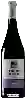
Château du BreuilAnjou Villages Rouge
 Red wine
This wine is a blend of 2 varietals which are the Cabernet franc and the Cabernet-Sauvignon.
In the mouth this red wine is a powerful with a nice balance between acidity and tannins.
This wine generally goes well with pork, poultry or beef.
Taste structure of the Anjou Villages Rouge from the Château du Breuil
Light | Bold | |
Smooth | Tannic | |
Dry | Sweet | |
Soft | Acidic |
In the mouth the Anjou Villages Rouge of Château du Breuil in the region of Loire Valley is a powerful with a nice balance between acidity and tannins.
Food and wine pairings with Anjou Villages Rouge
Pairings that work perfectly with Anjou Villages Rouge



Original food and wine pairings with Anjou Villages Rouge



The Anjou Villages Rouge of Château du Breuil matches generally quite well with dishes of lamb, pork or poultry such as recipes of saddle of lamb stuffed with chicken breast and basil, beef bourguignon with cookéo or pastilla with chicken (moroccan pie with brick sheets).
Details and technical informations about Château du Breuil's Anjou Villages Rouge.
Discover the grape variety: Cabernet franc
Cabernet Franc is one of the oldest red grape varieties in Bordeaux. The Libourne region is its terroir where it develops best. The terroirs of Saint-Emilion and Fronsac allow it to mature and develop its best range of aromas. It is also the majority in many blends. The very famous Château Cheval Blanc, for example, uses 60% Cabernet Franc. The wines produced with Cabernet Franc are medium in colour with fine tannins and subtle aromas of small red fruits and spices. When blended with Merlot and Cabernet Sauvignon, it brings complexity and a bouquet of aromas to the wine. It produces fruity wines that can be drunk quite quickly, but whose great vintages can be kept for a long time. It is an earlier grape variety than Cabernet Sauvignon, which means that it is planted as far north as the Loire Valley. In Anjou, it is also used to make sweet rosé wines. Cabernet Franc is now used in some twenty countries in Europe and throughout the world.
Informations about the Château du Breuil
The Château du Breuil is one of of the world's great estates. It offers 18 wines for sale in the of Anjou-Villages to come and discover on site or to buy online.

The wine region of Anjou-Villages
The wine region of Anjou-Villages is located in the region of Anjou of Loire Valley of France. Wineries and vineyards like the Domaine Sauveroy or the Domaine Clos de l'Élu produce mainly wines red and white. The most planted grape varieties in the region of Anjou-Villages are Cabernet franc, Cabernet-Sauvignon and Merlot, they are then used in wines in blends or as a single variety. On the nose of Anjou-Villages often reveals types of flavors of blackberry, black currant or pepper and sometimes also flavors of black cherries, licorice or earthy.
The wine region of Loire Valley
The Loire Valley is a key wine region in western France. It follows the course of the Loire River on its Long journey through the heart of France, from the inland hills of the Auvergne to the plains of the French Atlantic coast near Nantes (Muscadet country). Important in terms of quantity and quality, the region produces large quantities (about 4 million h/l each year) of everyday wines, as well as some of France's greatest wines. Diversity is another of the region's major assets; the styles of wine produced here range from the light, tangy Muscadet to the Sweet, honeyed Bonnezeaux, the Sparkling whites of Vouvray and the juicy, Tannic reds of Chinon and Saumur.
The word of the wine: Wrapped
Said of a wine rich in alcohol, but in which the mellowness dominates.