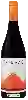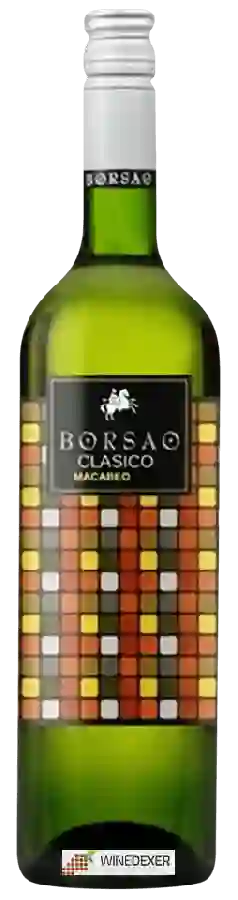
Winery BorsaoClásico Macabeo
 White wine


This wine generally goes well with

Wine flavors and olphactive analysis


On the nose the Clásico Macabeo of Winery Borsao in the region of Aragon often reveals types of flavors of citrus fruit, tropical fruit.
Details and technical informations about Winery Borsao's Clásico Macabeo.
Discover the grape variety: Gros Cabernet
Colourful, structured reds with a deep purple robe, firm, tight tannins and an ample palate with preserved acidity, featuring signature aromas of black fruits (blackcurrant, blackberry), red pepper and herbaceous notes typical of the Cabernet family. Age-worthy profile. Almost gone from commercial cultivation, preserved in varietal collections for its great genetic value. French autochthonous black variety from the South-West, parent of Carménère (crossed with Cabernet Franc).
Last vintages of this wine
The best vintages of Clásico Macabeo from Winery Borsao are 2019, 2018, 0, 2017
Informations about the Winery Borsao
The Winery Borsao is one of of the world's great estates. It offers 63 wines for sale in the of Campo de Borja to come and discover on site or to buy online.

The wine region of Campo de Borja
DO of Aragon at the foot of Moncayo, nicknamed the 'Empire of Garnacha' (~60% of the vineyard, plantings since 1145). Grenache as a generous, fruity red: signature notes of ripe cherry, raspberry, plum, garrigue, sweet spices and a peppery touch, round tannins and a sunny palate — old vines aged 30-50 years. Supple Tempranillo, firm Mazuelo, Cabernet and Syrah round things out. Whites Macabeo, Chardonnay, Moscatel.
The wine region of Aragon
Autonomous community of northeast Spain, historic kingdom of Iberian red Grenache (~75%). Signature Garnacha: generous and sun-drenched with signature ripe cherry, crushed strawberry, garrigue, kirsch, sweet spice and a balsamic touch, round tannins and a warm, alcoholic palate. 4 major DOs: Cariñena the largest (old vines), Calatayud high-altitude, Campo de Borja and Somontano at the Pyrenean foothills. Fresh Macabeo and Garnacha blanca whites.
The word of the wine: Bold
A wine with a smooth texture reminiscent of fats.