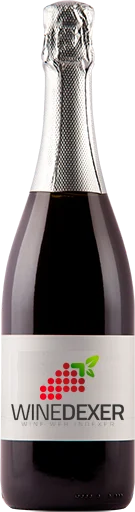
Winery Borgo San PietroCuvée
 Sparkling wine


This wine generally goes well with vegetarian, appetizers and snacks or shellfish.
Food and wine pairings with Cuvée
Pairings that work perfectly with Cuvée



Original food and wine pairings with Cuvée


The Cuvée of Winery Borgo San Pietro matches generally quite well with dishes of appetizers and snacks or aperitif such as recipes of verrine of beetroot and saint moret or green tomatoes in vinegar.
Details and technical informations about Winery Borgo San Pietro's Cuvée.
Discover the grape variety: Pinotin
Swiss interspecific cross obtained in 1991 by Valentin Blattner. The parents would be pinot noir and an interspecific variety resistant to diseases and, for others, it would be a cross between cabernet-sauvignon and ((sylvaner x riesling) x (12 417 Seyve-Villard x 7053 Seibel)) see graph www.winogrona.org. No resistance gene could be identified for either mildew or powdery mildew. It can be found in Switzerland, Belgium, Holland, Germany, ... still little known in France.
Last vintages of this wine
The best vintages of Cuvée from Winery Borgo San Pietro are 0
Informations about the Winery Borgo San Pietro
The Winery Borgo San Pietro is one of of the world's greatest estates. It offers 7 wines for sale in the of Veneto to come and discover on site or to buy online.

The wine region of Veneto
Veneto is an important and growing wine region in northeastern Italy. Veneto is administratively Part of the Triveneto area, aLong with its smaller neighbors, Trentino-Alto Adige and Friuli-Venezia Giulia. In terms of geography, culture and wine styles, it represents a transition from the Alpine and Germanic-Slavic end of Italy to the warmer, drier, more Roman lands to the South. Veneto is slightly smaller than the other major Italian wine regions - Piedmont, Tuscany, Lombardy, Puglia and Sicily - but it produces more wine than any of them.
The word of the wine: Vinification of sweet wines
Moelleux and liquoreux wines are characterized by the presence of residual sugars (natural sugar of the grape), not transformed into alcohol under the effect of yeasts. The fermentation is stopped by cold and by the addition of sulphur dioxide (sulphur).