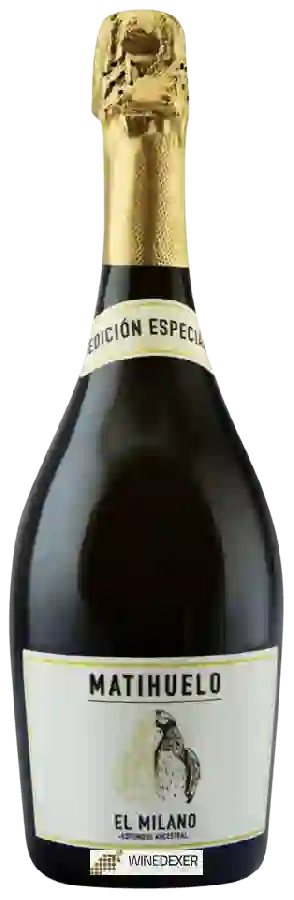
Bodegas MatihueloAlbarín El Milano Espumoso Ancestral
 wine
wine
This wine generally goes well with
The Albarín El Milano Espumoso Ancestral of the Bodegas Matihuelo is in the top 0 of wines of Tierra del Vino de Zamora.

Details and technical informations about Bodegas Matihuelo's Albarín El Milano Espumoso Ancestral.
Discover the grape variety: Counoise
Supple and fresh reds with a clear ruby colour, melted tannins and preserved acidity despite the sun, on aromas of strawberry, raspberry, red cherry, white pepper, garrigue and spiced notes. Airy and thirst-quenching palate. A traditional component of Châteauneuf-du-Pape AOC (one of the 13 authorised varieties), it brings freshness, finesse and aromatic complexity to southern blends of Côtes-du-Rhône and Languedoc. Native Rhône variety, very late-ripening.
Informations about the Bodegas Matihuelo
The Bodegas Matihuelo is one of of the world's greatest estates. It offers 3 wines for sale in the of Tierra del Vino de Zamora to come and discover on site or to buy online.

The wine region of Tierra del Vino de Zamora
DO of Castile and León (promoted 2007) south of Zamora on the north bank of the Duero, old pre-phylloxera vines. Tempranillo is the signature red (≥75%): dense and concentrated with deep notes of blackberry, plum, black cherry, leather, liquorice and a marked mineral touch, firm tannins and generous flesh — more tannic and alcoholic than Rioja, close to neighbouring Toro. Garnacha and Cabernet as complements. Malvasía, Verdejo and Godello for whites.
The wine region of Castille-et-Léon
Cradle of great Castilian reds on high-altitude plateaus (450-1000 m) of the Duero. Tempranillo king (Tinto Fino, Tinta de Toro): powerful, structured reds with notes of black cherry, blackberry, plum, leather and spices, firm tannins and length worthy of long ageing. Stars: Ribera del Duero (Vega Sicilia, Pingus), fleshy Toro, Bierzo (fresh mineral Mencía). Lively herbaceous Verdejo whites from Rueda, cut grass and citrus.
The word of the wine: Malolactic fermentation
Called second fermentation or malo for short. It is the degradation (under the effect of bacteria) of the malic acid naturally present in the wine into milder, less aggressive lactic acid. Some producers or wineries refuse this operation by "blocking the malo" (by cold and adding SO2) to keep a maximum of acidity which carries the aromas and accentuates the sensation of freshness.