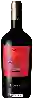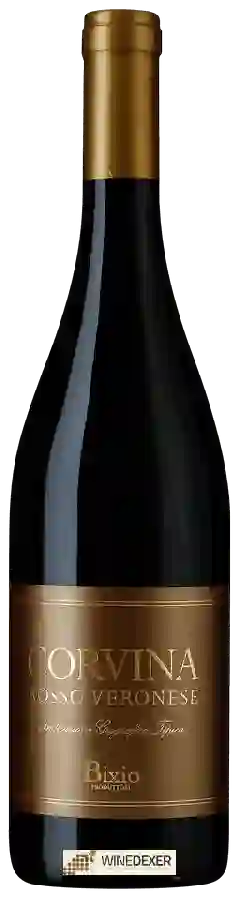
Winery BixioCorvina Rosso Veronese
 Red wine



In the mouth this red wine is a powerful.
This wine generally goes well with beef, game (deer, venison) or lamb.

Taste structure of the Corvina Rosso Veronese from the Winery Bixio
Light | Bold | |
Smooth | Tannic | |
Dry | Sweet | |
Soft | Acidic |
In the mouth the Corvina Rosso Veronese of Winery Bixio in the region of Veneto is a powerful.
Food and wine pairings with Corvina Rosso Veronese
Pairings that work perfectly with Corvina Rosso Veronese



Original food and wine pairings with Corvina Rosso Veronese

The Corvina Rosso Veronese of Winery Bixio matches generally quite well with dishes of beef, pasta or lamb such as recipes of chickpeas spanish style, makroud or lamb mouse with onions and red wine.
Details and technical informations about Winery Bixio's Corvina Rosso Veronese.
Discover the grape variety: Piquepoul
Languedoc family with very high acidity, aromatic signature of southern France. Piquepoul Blanc gives lively, saline whites (Picpoul de Pinet AOC) with notes of citrus, white flowers and marine iodine, ideal with oysters. Piquepoul Noir gives fruity, fresh reds, one of the thirteen authorised varieties at Châteauneuf-du-Pape. French autochthonous variety from Languedoc, in white, black and grey versions.
Last vintages of this wine
The best vintages of Corvina Rosso Veronese from Winery Bixio are 2014, 2013, 0, 2009
Informations about the Winery Bixio
The Winery Bixio is one of of the world's greatest estates. It offers 29 wines for sale in the of Veneto to come and discover on site or to buy online.

The wine region of Veneto
World star of Prosecco: fresh, light Glera sparklers with notes of pear, green apple and white flowers, fruity, convivial bubbles. Veronese reds from Corvina and Rondinella: light, crisp Bardolino, fruity Valpolicella, opulent, concentrated Amarone DOCG (black cherry, chocolate, raisin) from dried grapes. Mineral, almondy Soave (Garganega) whites, fresh Pinot Grigio. 97,500 ha, Italy's largest production.
The word of the wine: Tertiary aromas
Aromas resulting from the aging of the wine in the bottle. The aromas evolve with time, from fresh fruitiness to notes of stewed, candied or dried fruit, to aromas of venison or undergrowth.