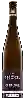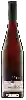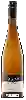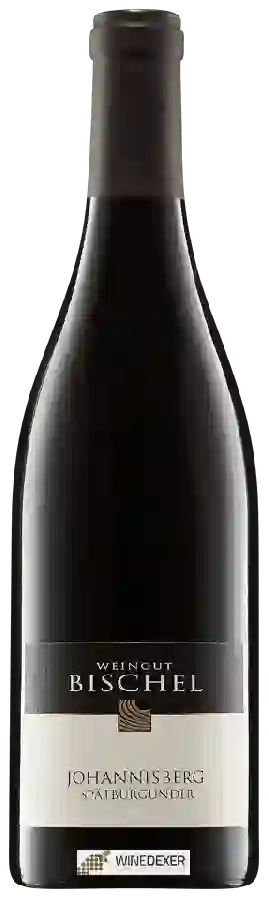
Winery BischelSpätburgunder
 Red wine


In the mouth this red wine is a with a nice freshness.
This wine generally goes well with poultry, beef or veal.

Taste structure of the Spätburgunder from the Winery Bischel
Light | Bold | |
Smooth | Tannic | |
Dry | Sweet | |
Soft | Acidic |
In the mouth the Spätburgunder of Winery Bischel in the region of Rheingau is a with a nice freshness.
Food and wine pairings with Spätburgunder
Pairings that work perfectly with Spätburgunder



Original food and wine pairings with Spätburgunder

The Spätburgunder of Winery Bischel matches generally quite well with dishes of beef, veal or game (deer, venison) such as recipes of roast pork with pineapple, veal shank with mushrooms or quick duck breast with honey.
Details and technical informations about Winery Bischel's Spätburgunder.
Discover the grape variety: Boskoop glory
Simple, fruity reds with a clear ruby robe, supple tannins and a light palate with preserved acidity, featuring characteristic foxy aromas of Labrusca varieties, red fruits and herbal notes. Early-ripening and disease-resistant. Grown mainly under glass in the Netherlands, Belgium, Germany and the UK, used primarily as a table grape in northern climates. Dutch hybrid (vinifera × labrusca), discovered around 1900 by Gérard Van Tol.
Last vintages of this wine
The best vintages of Spätburgunder from Winery Bischel are 0
Informations about the Winery Bischel
The Winery Bischel is one of of the world's great estates. It offers 57 wines for sale in the of Johannisberg to come and discover on site or to buy online.

The wine region of Johannisberg
Historic village of the Rheingau (between Winkel and Geisenheim), worldwide birthplace of Riesling: Schloss Johannisberg was the first vineyard entirely planted with Riesling (~1720) and the first to vinify Spätlese in 1775. Riesling is the exclusive signature white: dry and mineral with citrus, white peach, apple, white flowers and a typical petrol note, vibrant acidity and slate depth. Four VDP Grosse Lage (Schloss Johannisberger, Klaus, Hölle, Mittelhölle).
The wine region of Rheingau
Historic cradle of great German Riesling: age-worthy whites of rare precision, from taut dry (Trocken) to botrytised sweet (Auslese, Beerenauslese, TBA) with notes of peach, citrus, acacia honey, noble petrol and slatey minerality. Riesling king on ~80% of the vineyard. Also Spätburgunder (Pinot Noir, 8%), notably the fine, silky Assmannshausen. 3,100 ha on south-facing slopes overlooking the Rhine (Hesse).
The word of the wine: Bleeding
Old practice for red wines. As soon as the vat is filled with grapes, the tap is opened. A sweet but clear juice escapes from the vat (it can also be used to make rosé). The colour and density of the juice is enhanced, but it should not be overdone. Rarely more than 10% of the volume of a vat, otherwise you risk losing fruit and bringing in bitterness.