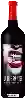
Winery Bee FamousOrganic Plan de Dieu
 Red wine


In the mouth this red wine is a powerful with a nice balance between acidity and tannins.
This wine generally goes well with beef, veal or pasta.
Taste structure of the Organic Plan de Dieu from the Winery Bee Famous
Light | Bold | |
Smooth | Tannic | |
Dry | Sweet | |
Soft | Acidic |
In the mouth the Organic Plan de Dieu of Winery Bee Famous in the region of Languedoc-Roussillon is a powerful with a nice balance between acidity and tannins.
Wine flavors and olphactive analysis

Food and wine pairings with Organic Plan de Dieu
Pairings that work perfectly with Organic Plan de Dieu



Original food and wine pairings with Organic Plan de Dieu
The Organic Plan de Dieu of Winery Bee Famous matches generally quite well with dishes of beef, pasta or veal such as recipes of braised beef with carrots, capellini with vegetables or filet mignon of veal with cider.
Details and technical informations about Winery Bee Famous's Organic Plan de Dieu.
Discover the grape variety: Boskoop glory
It is said to be a natural interspecific cross between a vitis vinifera and a vitis labrusca, the isabelle variety being a better known example. It was discovered by Gérard Van Tol Boskoop and imported into Germany by Günter Pfeiffer. It can also be found in the Netherlands, Belgium and England, where it is commonly grown in greenhouses. We noted that the schuyler looks somewhat like the Boskoop glory even if the origins, each time put forward, are quite different, to be followed!
Informations about the Winery Bee Famous
The Winery Bee Famous is one of of the world's greatest estates. It offers 17 wines for sale in the of Languedoc-Roussillon to come and discover on site or to buy online.

The wine region of Languedoc-Roussillon
Languedoc (formerly Coteaux du Languedoc) is a key appellation used in the Languedoc-Roussillon wine region of southern France. It covers Dry table wines of all three colors (red, white and rosé) from the entire region, but leaves Sweet and Sparkling wines to other more specialized appellations. About 75% of all Languedoc wines are red, with the remaining 25% split roughly down the middle between whites and rosés. The appellation covers most of the Languedoc region and almost a third of all the vineyards in France.
The word of the wine: Frank
Said of a wine that is open and delivers itself immediately, and whose clarity excludes any defect.