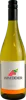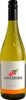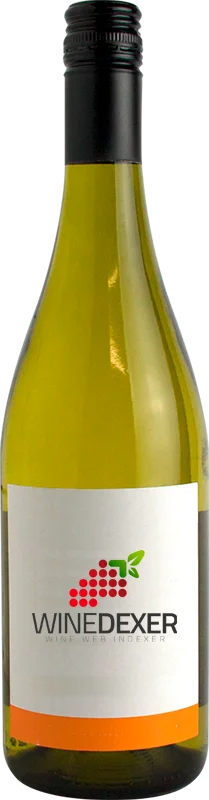
Winery Auf Den Funfzehn MorgenExtra Trocken Sauvignon Blanc
 White wine


In the mouth this white wine is a with a nice freshness.
This wine generally goes well with vegetarian, shellfish or goat cheese.
Taste structure of the Extra Trocken Sauvignon Blanc from the Winery Auf Den Funfzehn Morgen
Light | Bold | |
Dry | Sweet | |
Soft | Acidic |
In the mouth the Extra Trocken Sauvignon Blanc of Winery Auf Den Funfzehn Morgen in the region of Rheinhessen is a with a nice freshness.
Food and wine pairings with Extra Trocken Sauvignon Blanc
Pairings that work perfectly with Extra Trocken Sauvignon Blanc



Original food and wine pairings with Extra Trocken Sauvignon Blanc
The Extra Trocken Sauvignon Blanc of Winery Auf Den Funfzehn Morgen matches generally quite well with dishes of shellfish, vegetarian or goat cheese such as recipes of carri of shrimps with chillies, nanie's diced ham quiche or knacki pie.
Details and technical informations about Winery Auf Den Funfzehn Morgen's Extra Trocken Sauvignon Blanc.
Discover the grape variety: Arbane
Arbane or arbanne is a very old white grape variety from the north/east of France, coming from the Aube and more precisely from the Champagne region. The Comité Interprofessionnel des Vins de Champagne wishes to preserve the use of traditional grape varieties of Champagne. The Arbane is a small bunch of grapes with small berries and a very sweet pulp, a late variety that needs sun and heat to concentrate all its sugars. It gives a wine rich in alcohol, elegant and nervous, with a floral nose and a nice acidity.
Informations about the Winery Auf Den Funfzehn Morgen
The Winery Auf Den Funfzehn Morgen is one of of the world's greatest estates. It offers 11 wines for sale in the of Rheinhessen to come and discover on site or to buy online.

The wine region of Rheinhessen
Rheinhessen is Germany's largest region for producing the quality wines of the Qualitätswein bestimmter Anbaugebiete (QbA) and Prädikatswein designations, with roughly 26,500 hectares (65,000 acres) of Vineyard">Vineyards as of 2014. Many of its most significant viticultural areas are favorably influenced by the Rhine river, which runs aLong its North and eastern borders. The Rhine, along with the Nahe river to the west and the Haardt mountains to its South, form a natural border. Rheinhessen covers an area south of Rheingau, north of Pfalz and east of Nahe, and is located within the Rhineland-Palatinate federal state.
The word of the wine: Sorting
Action which consists in removing the bad grains, not ripe or affected by the rot. We often use vibrating sorting tables which, by shaking, make the impurities fall to the ground. In the case of sweet wines, we speak of harvesting by successive selections, in several passages, to select the very ripe grapes each time.