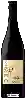
Winery AtumSelection Priorat Red
 Red wine


In the mouth this red wine is a powerful with a nice balance between acidity and tannins.
This wine generally goes well with poultry, beef or game (deer, venison).
Taste structure of the Selection Priorat Red from the Winery Atum
Light | Bold | |
Smooth | Tannic | |
Dry | Sweet | |
Soft | Acidic |
In the mouth the Selection Priorat Red of Winery Atum in the region of Catalogne is a powerful with a nice balance between acidity and tannins.
Food and wine pairings with Selection Priorat Red
Pairings that work perfectly with Selection Priorat Red



Original food and wine pairings with Selection Priorat Red

The Selection Priorat Red of Winery Atum matches generally quite well with dishes of beef, lamb or game (deer, venison) such as recipes of baeckeoffe, lamb stew with melting peppers or leg of wild boar.
Details and technical informations about Winery Atum's Selection Priorat Red.
Discover the grape variety: Lauzet
Lauzet is a Béarnese grape variety, part of the AOC of Béarn and Jurançon. This variety almost disappeared at the end of the 1980s. At that time, it only occupied a small cultivated area of 1 hectare in all. With the genetic diversity and the multiple plantings that have been carried out, it was able to reach, in 1994, 4 ha. The bunches and berries of Lauzet are all small. As a Pyrenean variety, it has a median lobe. The plant has a fairly early budburst, which takes place one week after Chasselas. As for its maturity, it is of the third period. This variety is fertile and somewhat vigorous, and is slightly susceptible to grey rot. Lauzet produces a wine of average quality. When it is vinified dry, it has adequate acidity. It gives off aromas of fruit and spices. It is often blended with other Pyrenean white grape varieties.
Last vintages of this wine
The best vintages of Selection Priorat Red from Winery Atum are 2010, 0
Informations about the Winery Atum
The Winery Atum is one of of the world's greatest estates. It offers 3 wines for sale in the of Catalogne to come and discover on site or to buy online.

The wine region of Catalogne
Catalonia (Catalunya in Catalan and Cataluña in Spanish) is an autonomous community in the Northeast of Spain. It extends from the historic county (comarca) of Montsia in the South to the border with France in the north. The Mediterranean Sea forms its eastern border and offers 580 km of coastline. The Catalunya D.
The word of the wine: Faded
Said of a wine that has lost its brilliance and depth. It can also be used to describe the nose of an old wine that has lost its aromatic freshness.